
Key takeaways
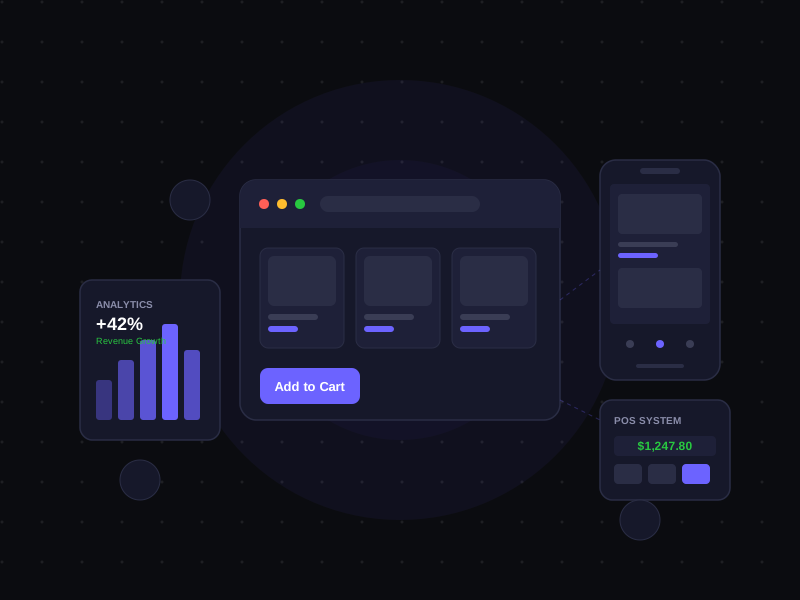
- Retail software development solutions integrate inventory, POS, ecommerce, and customer management into unified platforms.
- AI-driven automation and cloud-based architectures enable real-time decision-making and scalability.
- Custom retail software delivers 40% higher ROI compared to off-the-shelf solutions for enterprise operations.
- Omnichannel capabilities are essential for meeting modern customer expectations across all touchpoints.
Understanding Retail Software Development Solutions
The retail landscape has undergone a dramatic transformation over the past decade. Traditional brick-and-mortar stores now compete with ecommerce giants, mobile commerce platforms, and social shopping experiences. In this environment, retail software development solutions have become the backbone of successful retail operations, enabling businesses to create seamless, integrated experiences across all customer touchpoints.
Retail software development solutions encompass a comprehensive ecosystem of technologies designed to streamline operations, enhance customer experiences, and drive revenue growth. These solutions go beyond basic point-of-sale systems to include sophisticated inventory management, customer relationship management, supply chain optimization, and advanced analytics capabilities. For modern retailers, investing in custom retail software development is no longer optional—it's a strategic imperative for survival and growth.
The complexity of modern retail operations demands software that can handle multiple sales channels, real-time inventory synchronization, personalized customer interactions, and data-driven decision-making. Whether you're a boutique retailer looking to expand online or an enterprise chain managing hundreds of locations, retail software development solutions provide the technological foundation needed to thrive in today's competitive marketplace.
Key Features and Components
Effective retail software development solutions must incorporate several critical components that work together to create a cohesive retail management system. These features form the foundation of modern retail operations and enable businesses to meet evolving customer expectations while maintaining operational efficiency.
- Point of Sale (POS) Systems: Advanced POS software development provides secure payment processing, real-time inventory updates, customer data capture, and seamless integration with other retail systems. Modern POS solutions support multiple payment methods, including mobile wallets, contactless payments, and buy-now-pay-later options.
- Inventory Management Software for Retail: Real-time inventory tracking across multiple locations, automated reordering, demand forecasting, and stock optimization. This component prevents stockouts, reduces carrying costs, and ensures product availability across all channels.
- Customer Relationship Management: Comprehensive CRM capabilities that track customer interactions, purchase history, preferences, and loyalty program participation. Retail CRM solutions enable personalized marketing, targeted promotions, and improved customer retention strategies.
- Ecommerce Integration: Seamless connectivity between physical stores and online channels, including real-time product information synchronization, unified shopping carts, and consistent pricing across platforms.
- Analytics and Reporting: Advanced business intelligence tools that provide insights into sales performance, customer behavior, inventory turnover, and operational efficiency. These analytics enable data-driven decision-making and strategic planning.
Types of Retail Software Solutions
Retail software development solutions come in various forms, each designed to address specific operational needs and business models. Understanding these different types helps retailers choose the right combination of tools to support their unique requirements and growth objectives.
- Enterprise Retail Software Solutions: Comprehensive platforms designed for large-scale retail operations with multiple locations, complex supply chains, and high transaction volumes. These solutions typically include advanced features like workforce management, advanced analytics, and sophisticated inventory optimization algorithms.
- Cloud-Based Retail Software: Hosted solutions that offer scalability, automatic updates, and reduced IT infrastructure requirements. Cloud retail software enables remote access, real-time synchronization across locations, and predictable subscription-based pricing models.
- Retail ERP Software: Enterprise Resource Planning systems specifically tailored for retail operations, integrating finance, HR, supply chain, and retail operations into a single unified platform. Retail ERP solutions provide end-to-end visibility and control over all business processes.
- Omnichannel Retail Solutions: Integrated platforms that create seamless experiences across online, mobile, and physical store channels. These solutions enable features like buy-online-pickup-in-store (BOPIS), endless aisle capabilities, and unified customer profiles across all touchpoints.
- Retail Automation Solutions: AI-powered tools that automate routine tasks like inventory replenishment, price optimization, customer service chatbots, and fraud detection. These solutions reduce operational costs while improving accuracy and customer satisfaction.
Benefits for Modern Retailers
Investing in custom retail software development delivers substantial returns across multiple dimensions of retail operations. The benefits extend far beyond basic operational efficiency to include strategic advantages that drive long-term business success and competitive differentiation.
- Enhanced Customer Experience: Integrated retail software enables personalized shopping experiences, faster checkout processes, and consistent service across all channels. Customers enjoy seamless transitions between online research and in-store purchases, with access to their complete purchase history and preferences.
- Operational Efficiency: Automation of routine tasks reduces manual errors, speeds up processes, and frees staff to focus on value-added customer interactions. Retail management software streamlines everything from inventory receiving to employee scheduling, reducing operational costs by up to 30%.
- Real-Time Decision Making: Access to up-to-the-minute data on sales, inventory, and customer behavior enables retailers to make informed decisions quickly. This agility is crucial in responding to market trends, managing promotions, and optimizing product assortments.
- Scalability and Flexibility: Custom retail software solutions grow with your business, easily accommodating new locations, product lines, or sales channels without requiring complete system overhauls. This scalability protects technology investments and supports expansion strategies.
- Competitive Advantage: Retail digital transformation through custom software creates unique capabilities that differentiate your business from competitors. Whether through superior customer insights, innovative shopping experiences, or operational excellence, technology becomes a strategic asset.
Technology Trends Shaping Retail Software
The retail software development landscape continues to evolve rapidly, driven by emerging technologies and changing consumer expectations. Staying ahead of these trends is essential for retailers who want to maintain competitive advantage and deliver cutting-edge shopping experiences.
- AI in Retail Software: Artificial intelligence is revolutionizing retail through personalized product recommendations, demand forecasting, dynamic pricing, and automated customer service. AI-powered retail software can analyze vast amounts of data to identify patterns and optimize operations in ways that were previously impossible.
- Mobile-First Development: With mobile commerce accounting for an increasing share of retail sales, retail app development has become central to software strategy. Progressive Web Apps (PWAs) and native mobile applications provide fast, intuitive shopping experiences tailored to mobile devices.
- Internet of Things (IoT) Integration: Connected devices enable smart inventory management, automated checkout processes, and enhanced in-store experiences. IoT sensors can track foot traffic, monitor product availability, and even adjust store environments based on customer preferences.
- Blockchain for Supply Chain: Distributed ledger technology provides unprecedented transparency and traceability in retail supply chains. This is particularly valuable for luxury goods, pharmaceuticals, and food products where authenticity and safety are critical.
- Augmented Reality Shopping: AR technology enables virtual try-on experiences, product visualization in home environments, and interactive in-store navigation. These immersive experiences bridge the gap between online and physical shopping, increasing conversion rates and customer satisfaction.
Development Process Overview
Successful retail software development follows a systematic process that ensures alignment with business objectives, technical requirements, and user needs. Understanding this process helps retailers plan effectively and set realistic expectations for implementation timelines and outcomes.
- Discovery and Planning: The initial phase involves comprehensive business analysis, stakeholder interviews, and requirement gathering. This stage defines project scope, success metrics, and technical architecture. For retail software development solutions, this phase must account for complex integrations with existing systems and third-party services.
- Design and Prototyping: UX/UI design creates intuitive interfaces for both customer-facing applications and administrative tools. Prototyping and user testing ensure the software meets the needs of different user groups, from sales associates to inventory managers.
- Development and Integration: Agile development methodologies enable iterative progress and regular feedback loops. This phase includes core functionality development, API integrations with payment gateways and shipping providers, and data migration from legacy systems.
- Testing and Quality Assurance: Comprehensive testing includes functional testing, performance testing under peak load conditions, security testing for payment processing, and user acceptance testing across all retail scenarios.
- Deployment and Training: Phased rollout minimizes disruption to retail operations. Comprehensive training programs ensure staff can effectively utilize new systems, while ongoing support addresses issues and optimizes system performance.
Cost and Scalability Considerations
The investment in retail software development solutions varies significantly based on scope, complexity, and scale. Understanding the cost drivers and planning for scalability ensures that technology investments deliver long-term value and support business growth without requiring complete system replacements.
- Initial Development Costs: Custom retail software development typically ranges from $100,000 to $500,000+ for enterprise solutions, depending on complexity and integration requirements. Key cost factors include the number of user types, integration complexity, and customization requirements.
- Ongoing Maintenance: Annual maintenance costs typically represent 15-20% of initial development costs and include updates, security patches, bug fixes, and technical support. Cloud-based retail software may have lower upfront costs but higher ongoing subscription fees.
- Scalability Planning: Enterprise retail software solutions must be architected for growth, considering factors like increasing transaction volumes, additional locations, new product lines, and emerging sales channels. Scalability requirements significantly impact both initial architecture decisions and long-term costs.
- ROI Measurement: Successful retail software implementations typically deliver 200-300% ROI over three years through increased sales, reduced operational costs, improved inventory turnover, and enhanced customer retention. Key metrics include average transaction value, inventory carrying costs, and customer lifetime value.
- Total Cost of Ownership: Beyond development and maintenance, consider costs for hardware, training, data migration, and potential system integrations. A comprehensive TCO analysis helps in comparing custom retail software development versus off-the-shelf solutions.
Conclusion: Transforming Retail Through Technology
Retail software development solutions have evolved from operational tools to strategic assets that drive business transformation. In an era where customer expectations continue to rise and competition intensifies across all channels, technology investment is no longer a cost center but a growth engine.
The future of retail belongs to organizations that leverage custom software solutions to create differentiated experiences, optimize operations, and make data-driven decisions at scale. Whether through AI-powered personalization, seamless omnichannel experiences, or automated supply chain optimization, retail software development solutions provide the foundation for sustainable competitive advantage.
Success in retail digital transformation requires careful planning, strategic technology partnerships, and a focus on measurable business outcomes. By investing in the right retail software development solutions and following proven implementation methodologies, retailers can position themselves for growth in an increasingly digital marketplace while maintaining the human connections that define exceptional retail experiences.