



Automatic Speech Recognition
Speech recognition converts the conversation to text in real time, running in the background without interrupting clinical flow.









An AI medical scribe listens to the clinician-patient conversation and generates a structured clinical note for review and sign-off — no dictation, no typing, no after-hours documentation.
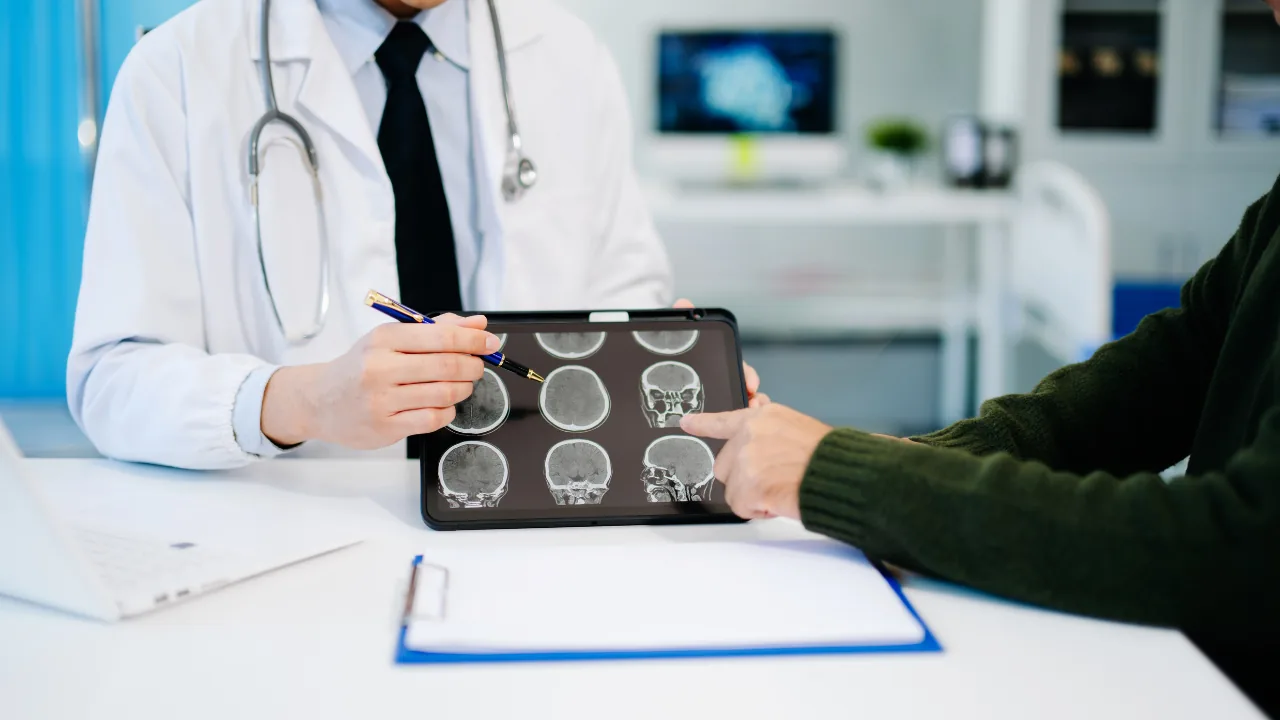
Speech recognition converts the conversation to text in real time, running in the background without interrupting clinical flow.
NLP and LLMs parse clinical content from the transcript into standard note sections — chief complaint, HPI, ROS, exam, assessment, and plan.
The clinician reviews, corrects, and signs the AI draft before it enters the EHR — preserving accountability and catching errors before the permanent record.
Top platforms push draft notes into the correct EHR encounter, pre-populating templates and structured fields. Native integration — not copy-paste — is the key differentiator.
Documentation burden is a primary driver of physician burnout, with the average primary care physician documenting two hours after clinic. Ambient scribes are the most direct response.
We are not another ambient scribe vendor competing for your seats. We build the AI medical scribe software that digital health companies, EHR platforms and health systems ship under their own brand — or embed directly into a product they already sell.




Reselling someone else's ambient scribe caps your margin, hands them the clinical data, and leaves your roadmap hostage to their release cycle. A white-label AI medical scribe you own inverts all three. Here is what that build actually involves.
Most teams searching for a white label AI scribe are really asking whether to resell or to own. A reseller agreement makes you a channel. Owning the scribe makes it a product line: you set pricing, keep the customer relationship, and the encounter data stays inside your platform rather than flowing to a competitor.
The scribe lives inside your existing workflow — your login, your patient context, your note screen. Clinicians never switch applications, which is the single biggest driver of ambient scribe abandonment.
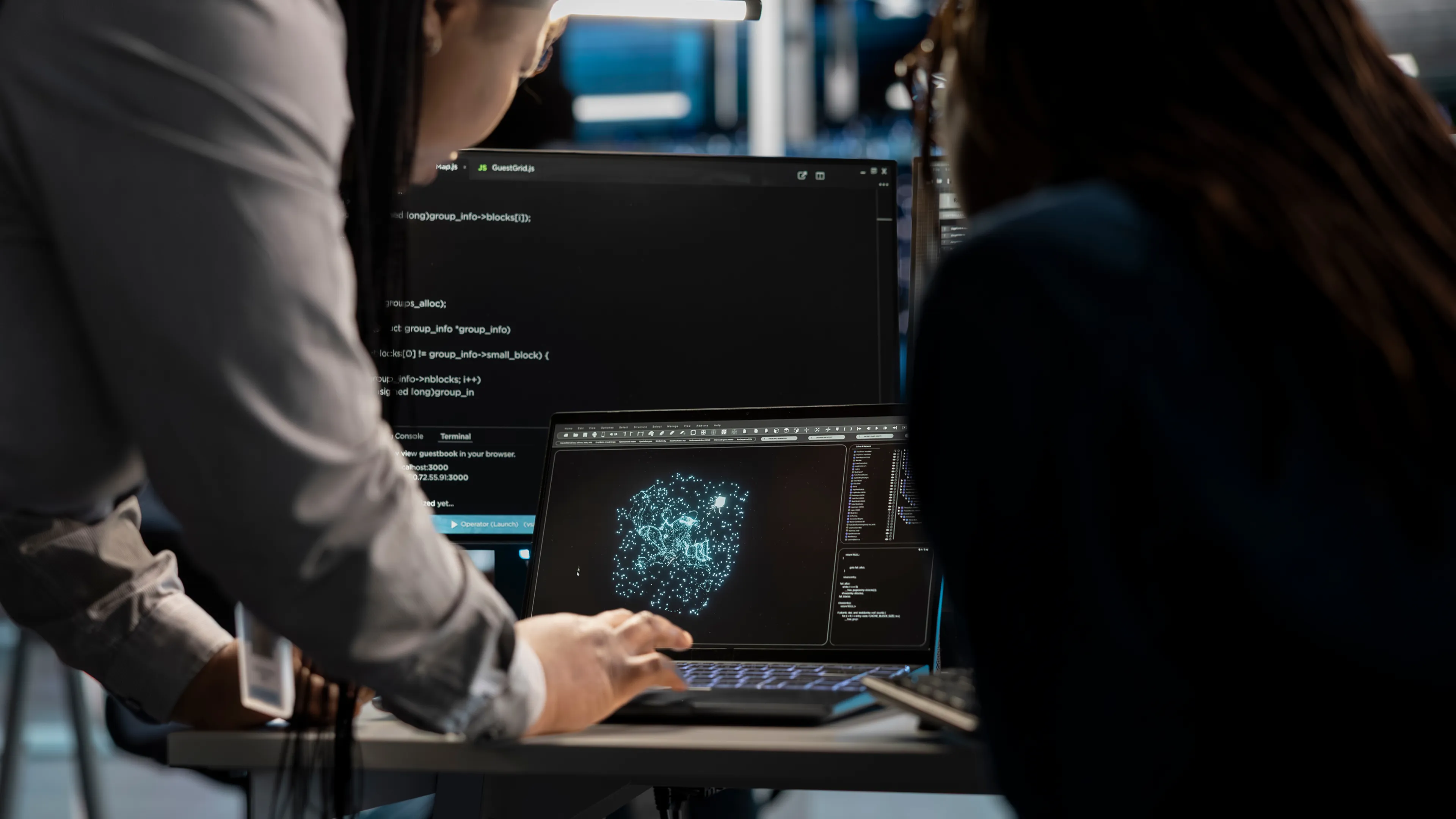
We build on Whisper, Deepgram or Azure Speech for transcription, and Claude, GPT or an open-weight model for note generation — chosen for your accuracy, cost and data-residency constraints rather than a house default.
If you are an EHR or practice-management vendor, the scribe ships as an API and embeddable UI your own customers consume — one integration, many downstream practices.
A HIPAA compliant AI scribe is an architecture decision, not a certificate you buy. BAA-backed infrastructure, consent capture built into the encounter start, configurable audio retention, and de-identification where training on real encounters is in scope.
A single-specialty pilot with one EHR integration is a contained build. Multi-specialty, multi-EHR, with coding and billing write-back is a larger programme. We scope both in discovery rather than quoting blind.
Ambient scribes eliminate three distinct documentation burdens — each recovering meaningful time from the clinician's day.
Typing during encounters splits attention between the EHR and the patient. Ambient scribes capture clinical content so the clinician stays present.
Ambient scribes cut after-hours EHR documentation — "pajama time" — to near zero, with draft notes ready for review within minutes of an encounter ending.
Reviewing a near-complete AI draft is far faster than composing from memory at day's end — shifting documentation from writing to quick review.
From specialty discovery to production rollout.


Speech, clinical NLP, EHR interoperability and HIPAA-eligible infrastructure — chosen for your accuracy and data-residency constraints.
O
OpenAI Whisper
 D
Deepgram Nova
D
Deepgram Nova
 A
Azure Speech
A
Azure Speech
 S
Speaker Diarisation
S
Streaming ASR
S
Speaker Diarisation
S
Streaming ASR
 C
Claude
G
GPT
C
Claude
G
GPT
 O
Open-Weight Models
C
Clinical NER
O
Open-Weight Models
C
Clinical NER
 R
RAG over Chart Data
R
RAG over Chart Data
 H
HL7 FHIR R4
S
SMART on FHIR
H
HL7 FHIR R4
S
SMART on FHIR
 H
HL7 v2
E
Epic
O
Oracle Health
A
athenahealth
I
ICD-10-CM
H
HL7 v2
E
Epic
O
Oracle Health
A
athenahealth
I
ICD-10-CM
 C
CPT
S
SNOMED-CT
L
LOINC
R
RxNorm
H
HIPAA / BAA
C
CPT
S
SNOMED-CT
L
LOINC
R
RxNorm
H
HIPAA / BAA
 C
Consent Capture
C
Consent Capture
 A
Audio Retention Policy
P
PHI De-Identification
A
Audit Logging
S
SOC 2
A
Audio Retention Policy
P
PHI De-Identification
A
Audit Logging
S
SOC 2
The ambient clinical documentation market has consolidated around a few platforms with real health system deployments and deep EHR integration — each with a distinct positioning.
Part of Microsoft since 2022, DAX Copilot is one of the most widely deployed ambient documentation platforms in the US, with Epic integration and broad health system adoption.
Developed with UPMC, Abridge features deep Epic EHR integration and a clinician co-design approach — producing documentation workflows grounded in real clinical practice.
A European-founded platform now expanding in North America, Nabla stands out for multilingual capabilities — key for health systems serving non-English-speaking patients.

Suki combines ambient documentation with voice EHR navigation — retrieving patient data and handling admin tasks — positioning as a broader AI productivity tool beyond note generation.
Ambient scribe deployment goes beyond platform selection. EHR integration depth, consent workflow, and specialty performance are the factors that determine whether a rollout succeeds.
Native EHR integration beats a copy-paste scribe.
Patients must know an AI is recording the encounter.
Primary care accuracy doesn't carry over to surgical or psychiatric encounters.
Confirm whether audio is discarded or retained for model training.
Clinicians who sign AI notes own every error in them.
Published accuracy reflects lab conditions, not yours.
Whether you are a digital health vendor adding ambient documentation to an existing product, an EHR platform embedding a scribe API, or a health system building rather than buying — we scope the specialty, the stack and the EHR integration, then build it. HIPAA-compliant, specialty-tuned, and yours to own.
Book a Scoping Call
100 Fastest Growth Companies
Global Spring Winner
Top App Development Company
AWS Partner Network
Google Cloud Partner
Highly Rated on Trustpilot
Verified Agency
Top App Development Company
ASSOCHAM Member
Cost tracks the integration surface, not a per-seat price. The drivers are how many specialties the note templates must cover, how many EHRs you write back to, whether coding and billing capture are in scope, and whether you bring your own speech and LLM stack or we select one. A single-specialty pilot against one EHR is a contained build; multi-specialty with multi-EHR write-back and coding is a programme. We scope in discovery on your actual product and workflows rather than quoting from a feature list, and that scoping output is useful to you even if you build it elsewhere.
License if ambient documentation is a feature your clinicians use and nothing more — the commercial platforms are mature and buying is faster. Build when the scribe is part of what you sell: if you are a digital health vendor, an EHR or practice-management platform, or you need the encounter data to stay inside your own system. Reselling caps your margin, hands the clinical data to a third party, and ties your roadmap to their release cycle. We will tell you plainly in discovery when buying is the better answer.
Epic, Oracle Health (formerly Cerner), athenahealth and custom or in-house EHRs. Write-back uses HL7 FHIR R4 and SMART on FHIR where the vendor exposes it, and HL7 v2 interfaces where it does not. Integration depth is the single largest lead item in any ambient scribe project and the most common reason rollouts slip, so we scope it first rather than last.
Four things, none of them optional: infrastructure covered by a signed BAA, consent captured at the start of the encounter rather than assumed, an explicit audio retention policy — immediate discard or a defined window, never left undefined — and encryption plus audit logging across the full path from microphone to signed note. Where training on real encounter audio is in scope, de-identification has to be designed in from the start, not retrofitted.
Yes, and it has to be. A behavioural health session note, an orthopaedic procedure note and a primary care SOAP note differ in structure, vocabulary and coding behaviour, and a general-purpose model produces a plausible note that clinicians then rewrite — which removes the time saving entirely. We build specialty templates and evaluate them against notes your clinicians actually sign, measuring edit distance rather than a generic accuracy score.
Yes — once the clinician reviews, corrects, and signs the draft, it carries the same legal and medical weight as a manually authored note. The attestation signature makes it the official clinical record regardless of how it was generated, and the signing clinician accepts full accountability for any AI errors.
Leading platforms achieve high accuracy in primary care encounters with minimal correction, but performance drops for specialized content, non-English conversations, or poor acoustics. Published results reflect controlled conditions, so validate real-world accuracy in your environment through a structured pilot.
Policies vary — some platforms discard audio after note generation, others retain it for model training under data use agreements. Audio of patient-clinician conversations carries HIPAA and state recording law implications that must be addressed in vendor contracts and consent processes before deployment.
A focused departmental pilot — 10–20 clinicians, single specialty — can launch in 4–8 weeks. System-wide deployment across multiple specialties typically runs 3–6 months, with native EHR integration depth being the longest lead item.
Some platforms — notably Nabla — have invested in multilingual capabilities, but performance in non-English languages varies widely. If your patients include non-English speakers, make multilingual accuracy a specific pilot criterion and request references with similar language demographics.