



Every Claim Takes Too Long to Settle
A claim that should settle in minutes sits in queues for days — eligibility, code validation, and policy checks all done manually.






Accepted as normal, these problems compound daily.

A claim that should settle in minutes sits in queues for days — eligibility, code validation, and policy checks all done manually.
Beyond duplicate claims and upcoding, billing rings, AI-generated documents, and synthetic identities slip past rule-based systems.
Preventable denials — wrong codes, missing documents, eligibility errors — drive rework, appeals, and provider frustration.
Skilled analysts key data, cross-check policies, and route simple claims that need no human judgment — an expensive use of experts.
By the time fraud surfaces in a post-payment audit, the money is gone — recovered only in fractions, cycle after cycle.
The figures that define what clinical technology must handle.
Our Qatar TeamQatar's National Health Strategy 2024–2030 turns national vision into real clinical and operational goals. The technology running inside it must meet the same standard.
Talk to Qatar TeamThree public entities on one national EMR.


HMC, PHCC, Sidra, and private healthcare groups.

AI-powered clinical tools and advanced analytics built for quaternary care complexity.

Simple enough for a busy primary care environment, powerful enough for national-level population health management.
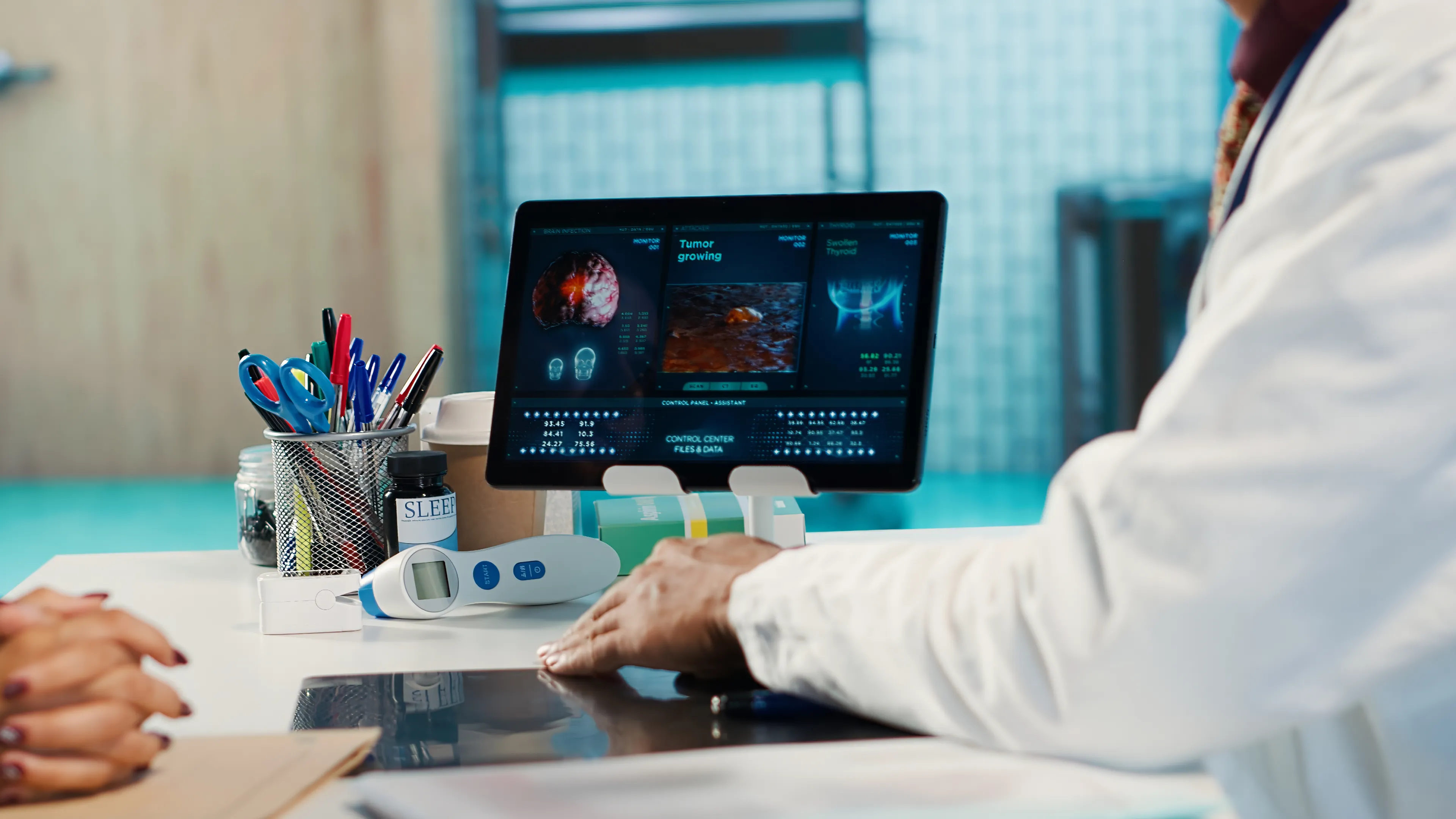
Clinical AI and analytics built for a regional referral centre — precision medicine and genomic workflows included.

MOPH-compliant, integrated with Qatar's national health exchange, and built for a patient population that expects public-sector digital quality.
Integrated with HMC and PHCC workflows. Cerner FHIR interoperability. MOPH digital health alignment. Qatar PDPPL data sovereignty. Multilingual clinical documentation across the public and private sectors. Book a Qatar healthcare demo.
Book a Qatar Demo
100 Fastest Growth Companies
Global Spring Winner
Top App Development Company
AWS Partner Network
Google Cloud Partner
Highly Rated on Trustpilot
Verified Agency
Top App Development Company
ASSOCHAM Member
Our platform integrates with Cerner through HL7 FHIR APIs, enabling data exchange between our operational and AI modules and HMC's Cerner deployment without requiring data migration or parallel data entry. Clinical staff work within familiar Cerner workflows while our AI layer adds intelligence to those workflows rather than replacing them.
Yes. Billing and insurance claim management within the platform is configured for Qatar's mandatory health insurance framework — including SEHA Mandatee coverage for Qatari nationals, private insurance claim processing for expatriate residents, and the coordination between public and private coverage that Qatar's insurance landscape requires.
The Arabic interface is built for Gulf clinical Arabic — the terminology, abbreviations, and documentation conventions that clinical staff in Qatar actually use, not machine-translated Standard Arabic. Patient-facing communications are configurable in multiple languages at the individual patient level, so a Tagalog-speaking patient and an Arabic-speaking patient receive communications in their own language from the same system.