



AI Pilots That Finally Scale
AI that works at your flagship deploys network-wide in weeks — no year-long lag, no rebuilding from scratch at each site.









Each location runs independently. Multi-Site Health System AI connects your entire network.

AI that works at your flagship deploys network-wide in weeks — no year-long lag, no rebuilding from scratch at each site.
HQ enforces network protocols automatically, while each hospital configures local workflows, language, and specialty processes.
Two merged hospital groups, two tech stacks — we unify them into one platform without taking either system offline.
One platform across your entire hospital network.


One platform across every hospital in your network.
One complete patient record across every facility, built on FHIR R4 and HL7.
Protocols and care pathways set once, deployed to every hospital automatically.
Every AI model monitored for drift and updated network-wide from one panel.
Billing, denial rates, and revenue leakage across every hospital at once.
Staff transfers, equipment sharing, and surge capacity coordinated network-wide.
Each result ties to a real network-level outcome.
Book a Live DemoFive phases that bring every hospital onto one platform.

We map every hospital's systems, workflows, and data structures — identifying what needs to be unified versus what can stay local.

A single data backbone across all sites via FHIR R4 and HL7. Patient records, clinical data, and operational metrics flow to one network-level data lake.

Clinical, billing, and operational AI deployed uniformly across every site. Each location goes live in sequence with on-the-ground implementation support.
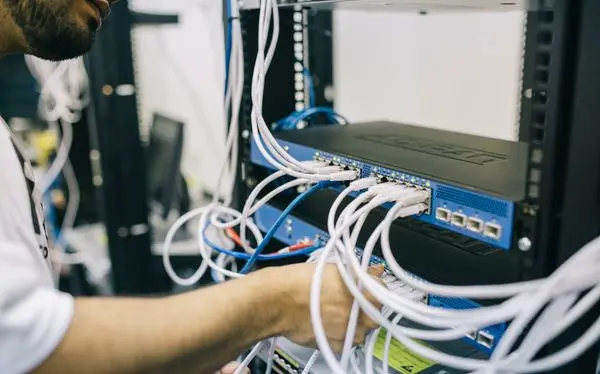
Network leadership gets the live multi-site dashboard. Department heads get their location-specific view. Everyone sees exactly what they need.

Continuous monitoring across every site — deviations flagged automatically, AI recommendations surfaced where improvements are available.
ABHA, NDHM, NABH, and DPDP Act compliance built in from the start, not retrofitted at audit time.
ABHA and NDHM integration with ABDM consent and record sharing.
NABH audit readiness and quality metrics from one dashboard.
FHIR R4 and HL7 connect all EHR platforms, no migrations needed.
DPDP Act 2023 and HIPAA-aligned handling with role-based access controls.
GST-compliant billing, claim standards, and PMJAY / Ayushman Bharat.
Centralized AI model registry, monitoring, and version control.
Your hospitals share a name. Now they can share intelligence. Book a 30-minute demo to see multi-site AI standardization built for a network your size.
Book a Network Demo
100 Fastest Growth Companies
Global Spring Winner
Top App Development Company
AWS Partner Network
Google Cloud Partner
Highly Rated on Trustpilot
Verified Agency
Top App Development Company
ASSOCHAM Member
Most common case. We integrate every EHR through FHIR R4 and HL7 APIs into one data layer, with no site changing systems.
Yes. Network protocols are enforced centrally while each hospital keeps its own local workflow configuration.
Networks of 3 to 5 hospitals go live in 8 to 12 weeks; 10 or more sites are phased over 3 to 6 months.
The platform flags model drift automatically, then retrains or updates that model network-wide from one panel.
Yes. ABHA and NDHM integration, NABH documentation, GST-compliant billing, and DPDP Act privacy are built in.
Post-merger integration is exactly what this platform is built for — we unify two stacks without shutting either down.