



A File Format
Encodes each image with structured metadata tags — patient demographics, study date, modality and acquisition parameters.









The universal standard for storing and transmitting medical images — it defines both the file format and the communication protocol.

Encodes each image with structured metadata tags — patient demographics, study date, modality and acquisition parameters.
Governs how imaging systems talk — a CT scanner sending to PACS, a workstation retrieving a study, an AI system returning results.
A study holds one or more series of image instances. Every accredited U.S. and Canada facility stores images as DICOM.
The technical foundation any imaging AI, radiology or diagnostic-imaging product depends on.




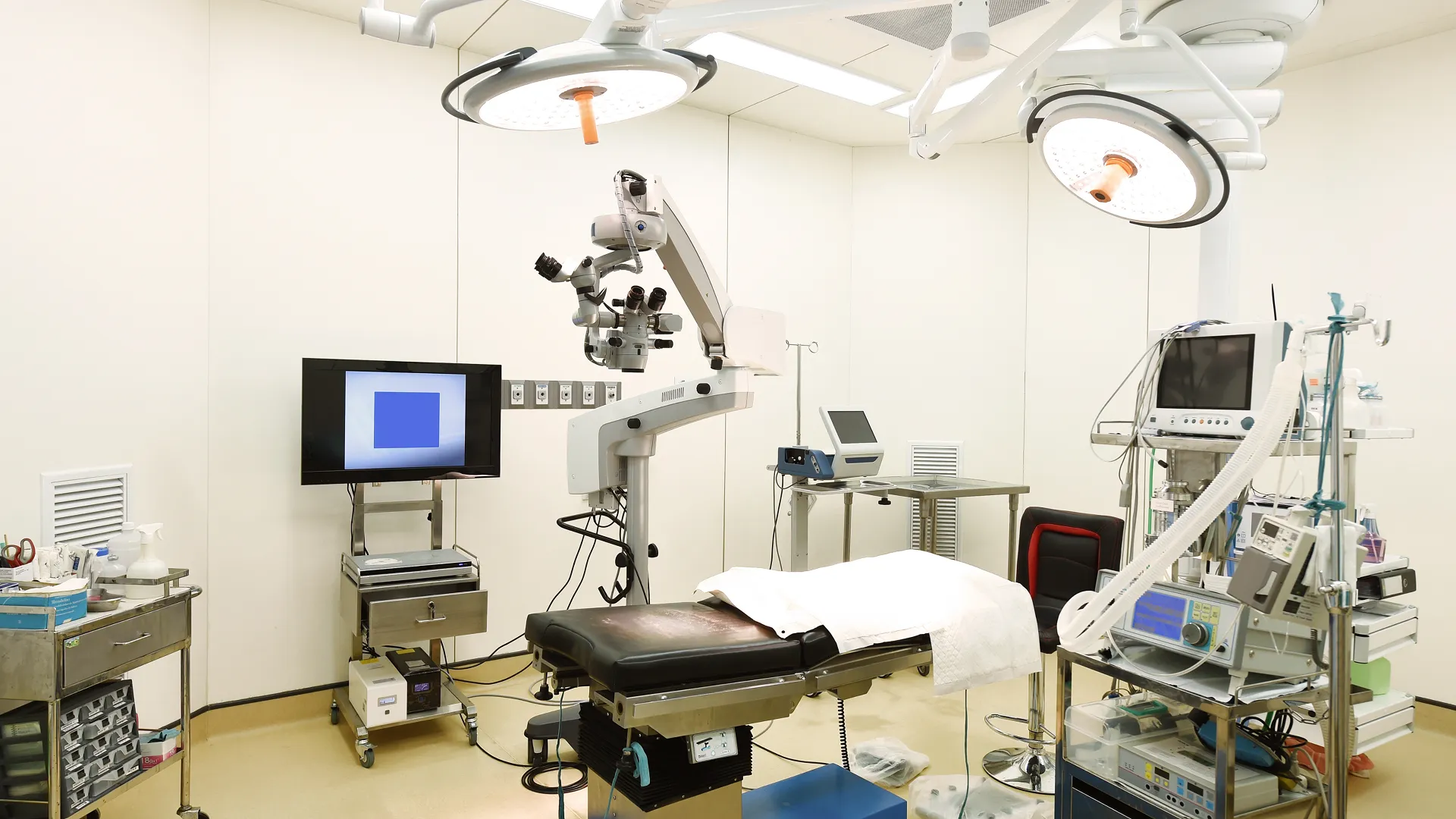

A reliable DICOM integration follows a defined path from environment mapping to validated production traffic.

Map PACS systems, modalities, VNAs and viewers. Determine which service classes and DICOMweb support are needed.

Configure AE titles for each system. Register with the PACS or VNA and set network addresses, ports and transfer syntaxes.

Review Conformance Statements for each PACS and modality. Conformance mismatches are a common source of integration failures.

Define which studies to receive — by modality, body part, or facility — and configure the PACS to forward them.

Test with real studies across modalities and sizes. Validate metadata quality, rendering fidelity and query/retrieve times.
Medical imaging is some of the most clinically valuable — and complex — data in healthcare; a reliable DICOM integration makes it usable.
FDA-cleared imaging AI needs reliable DICOM in and out.
Get DICOM wrong and metadata and retrieve times suffer.
One provincial PACS connection covers a whole region.
We build to sharing agreements, PIAs and technical review.
Service classes, web APIs, modalities and governance for real imaging environments — implemented to the conformance statement, not just the base standard.
Persistent connections for image storage, query, and retrieval.
RESTful DICOM access over HTTP for web and cloud platforms.
One integration layer across every imaging modality and transfer syntax.
Connectivity to PACS vendors, VNAs, and rule-based DICOM routers.
Formal access process: data sharing agreements, PIAs, technical review.
AI inference returned as native DICOM objects the PACS understands.
Proven DICOM toolkits and the service classes and web APIs interoperability depends on.
 D
dcm4che
D
DCMTK
D
dcm4che
D
DCMTK
 P
pydicom
P
pydicom
 F
fo-dicom
F
fo-dicom
 O
Orthanc
C
C-STORE / C-FIND
C
C-MOVE / C-GET
O
Orthanc
C
C-STORE / C-FIND
C
C-MOVE / C-GET
 W
WADO-RS
W
WADO-RS
 S
STOW-RS
S
STOW-RS
 Q
QIDO-RS
Q
QIDO-RS
 M
Modality Worklist
M
Modality Worklist
 O
OHIF Viewer
O
OHIF Viewer
 C
Cornerstone.js
C
Cornerstone.js
 D
dicom-parser
D
DICOM
D
DICOMweb
D
dicom-parser
D
DICOM
D
DICOMweb
 H
HL7 FHIR ImagingStudy
H
HL7 FHIR ImagingStudy
 H
HL7 v2 (orders/results)
H
HL7 v2 (orders/results)
 I
IHE Profiles (XDS-I)
I
IHE Profiles (XDS-I)
 A
AWS HealthImaging
A
AWS HealthImaging
 G
Google Cloud Healthcare DICOM
G
Google Cloud Healthcare DICOM
 A
Azure DICOM Service
V
Vendor Neutral Archive
A
AES-256 Encryption
A
Azure DICOM Service
V
Vendor Neutral Archive
A
AES-256 Encryption
PACS connectivity, DICOMweb, AI pipelines and provincial PACS access. Book a consultation and we will map the DICOM integration your product needs.
Book a DICOM Consult
100 Fastest Growth Companies
Global Spring Winner
Top App Development Company
AWS Partner Network
Google Cloud Partner
Highly Rated on Trustpilot
Verified Agency
Top App Development Company
ASSOCHAM Member
A PACS (Picture Archiving and Communication System) stores and distributes medical images. DICOM governs how systems talk to it — sending (C-STORE), querying and retrieving (C-FIND, C-MOVE), and web access (WADO-RS, QIDO-RS).
DIMSE (DICOM Message Service Element) is the traditional model — persistent connections and binary messages. DICOMweb is a newer set of RESTful services (WADO-RS, STOW-RS, QIDO-RS) accessing DICOM data over HTTP, built for web and cloud.
Accessing provincial PACS in Canada requires a formal process — a data sharing agreement with the health authority, a Privacy Impact Assessment (PIA), and technical review. Once approved, it uses standard DICOM or DICOMweb protocols.