Eligibility Errors Caught Before Service
Coverage checked pre-service, so no claim is denied after care.









Revenue Cycle & Insurance
The CAQH Index 2023 quantifies the administrative burden with unusual precision: manual insurance eligibility verification costs the US healthcare system $3.7 billion in excess annual administrative spend — yet 56% of providers still confirm patient coverage by phone call or manual portal navigation, despite the availability of electronic 270/271 transactions that cost a fraction of the manual equivalent.
Advisory Board and Experian Health research consistently shows that eligibility issues cause 24–30% of all initial claim denials — making eligibility errors the single largest root cause of first-pass claim failure across every specialty and payer mix. MGMA benchmarks put the average cost to rework a single denied claim at $118 in direct staff labour, and 65% of denied claims are never reworked at all — they are written off as lost revenue, absorbed as bad debt, or abandoned entirely when the rework cost exceeds the expected recovery. Black Book Market Research found that 75% of CFOs and revenue cycle directors rank eligibility errors as their top source of avoidable revenue leakage, and the American Academy of Family Physicians reports that staff in many physician practices spend more than 40% of their working day on insurance verification tasks that generate zero clinical value and zero patient satisfaction.
$3.7B The AI Eligibility Verification Agent automates insurance eligibility checks up to 72 hours before appointments, helping providers reduce eligibility denials, identify COB conflicts, detect terminated coverage, and verify prior authorization requirements before claims are submitted. Improve revenue cycle management, lower verification costs, and reduce denied claims with automated eligibility verification for healthcare providers. Book an eligibility denial assessment to discover how much your current verification process is costing your practice.
Business impact
80%
reduction in eligibility-driven claim denials achieved when verification is automated, moved upstream, and applied to every patient encounter rather than sampled or performed reactively
270/271 checks, benefits, COB, PA, and patient estimates.
Automated 270/271 eligibility checks across 900+ payers in under 3 seconds.
Extracts deductibles, co-pays, OOP maximums, and limits from every 271.
Applies COB rules to set payer order and flag conflicts before submission.
Matches ordered CPT/HCPCS against payer PA rules — flags PA needs at scheduling.
Estimates patient cost share before the visit to avoid billing disputes.
When 270/271 fails, AI-powered RPA works the payer portal directly.
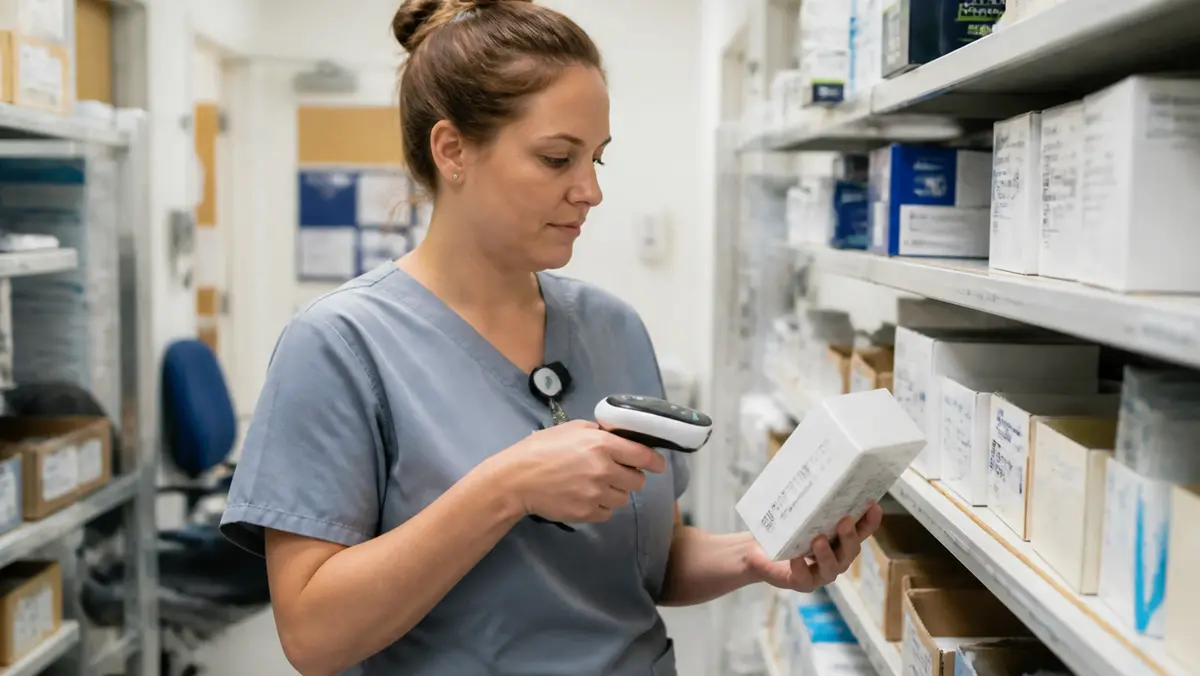
Coverage checked pre-service, so no claim is denied after care.
270/271 automation clears the manual phone and portal queue.
Patients see co-pay and deductible costs before the visit.
Integrations
Certified connectors for leading EHR platforms, clearinghouses, and patient financial solutions.
7 named systems it connects to
Running something not listed here? Tell us on the call — scoping the connector is the first step.
 AI Eligibility Verification Agent
 Epic
 Oracle Health
 athenahealth
 Availity
 Waystar
 Change Healthcare / Optum
 Phreesia
A delivered Bonami project that tackles the same problem this agent automates.
Classify every 835 ERA denial, draft payer-specific appeals and track each one to outcome.
View agentAudit every 835 ERA against contracted rates, flag payer underpayments and file disputes to recover revenue with Bonami X AI's underpayment recovery…
View agentRead clinical documentation, assign ICD-10 and CPT codes and validate NCCI edits to lift first-pass claim acceptance with Bonami X AI's medical…
View agentAn autonomous system that runs ANSI X12 270/271 transactions to 900+ payers, normalises benefits data, detects COB conflicts, pre-screens for prior authorisation, and generates patient financial estimates 72 hours before every appointment. It writes verified results back to the EHR, typically cutting first-pass eligibility denials up to 80% and saving 40–50% of staff time.
Eligibility errors cause 24–30% of initial denials — checks run too late, too narrow, or miss PA requirements. The agent eliminates all three by verifying every patient 72 hours out, querying all payers, and flagging PA requirements before ordering. Issues caught pre-visit cost nothing to fix; caught post-submission they run $118/claim to rework, and 65% are never reworked.
900+ commercial payers, Medicare (Parts A/B/C/D), and all 50 state Medicaid programmes via ANSI X12 270/271 EDI through Availity, Waystar, and Change Healthcare/Optum. For payers without EDI, AI-powered RPA navigates portals directly, and regional or international connections (including UAE DHA/HAAD) configure within 5–10 business days.
The agent queries every payer on the patient's record simultaneously and applies COB sequencing rules — the Birthday Rule for dual dependents, Medicare Secondary Payer rules, and correct Medicare/Medicaid sequencing for dual-eligibles. Retroactive Medicaid triggers re-verification and rebilling, with every determination logged.
Yes. TLS 1.3 in transit, AES-256 at rest, with a full HIPAA-compliant audit log of every transaction, portal query, and staff override. BAAs are executed with every clearinghouse partner, and EHR integrations use OAuth 2.0 and SMART on FHIR with minimum-scope permissions — no patient data goes to third-party AI training platforms.
Epic: FHIR R4 Coverage and Patient APIs, ADT HL7 v2.x for appointment events, and PA pre-screening via SmartForms or Best Practice Advisories. Oracle Health (Cerner): Millennium REST APIs and FHIR R4, with PA results via PowerChart alerts. Both write verified data directly to the EHR, with standard deployment in 2–4 weeks.
The agent automates NSA good-faith estimate generation for every uninsured and self-pay encounter — CPT-itemised charges, required disclosures, and delivery via print, portal, or email. For insured patients it generates a cost-share estimate from verified benefits, not required by NSA but shown to reduce billing disputes, with every estimate logged for a CMS-ready audit trail.
Standard deployment is 3–5 weeks: clearinghouse EDI, EHR APIs, and payer portal RPA setup, followed by payer testing and a parallel run before go-live. Typical 90-day impact for a 200-appointment/day group: eligibility denials down 60–80% ($14–19k/month saved) and point-of-service collections up 15–20%, with full ROI within 60–90 days.
This insurance eligibility verification software runs ANSI X12 270/271 transactions across 900+ payers automatically, 72 hours before every appointment, rather than phone calls or one-at-a-time portal lookups. It normalises benefits, detects COB conflicts, and writes verified coverage back to the EHR, leaving staff a focused exception worklist instead of hourly-billed manual checks.
Yes. Beyond the scheduled 72-hour batch, the software offers on-demand real-time eligibility verification — front-desk staff trigger a live check from the EHR worklist and get results within seconds. This covers walk-ins, same-day appointments, and check-in insurance changes across all payer types.
Every eligibility-driven denial is a claim that could have been billed clean the first time. Get a live demo of the AI Eligibility Verification Agent running against your actual appointment schedule — and a denial impact assessment showing exactly what your current verification process is costing your revenue cycle each month.
Book a Demo