
See what our clients say about working with Bonami Software across 200+ projects for 18+ industries. EXPLORE NOW!
We don't just build software. We deliver results. EXPLORE NOW!
See why businesses choose Bonami Software for reliable, scalable solutions. EXPLORE NOW!
We turn ideas into scalable products with proven delivery across 18+ industries. EXPLORE NOW!
See what our clients say about working with Bonami Software across 200+ projects for 18+ industries. EXPLORE NOW!
We don't just build software. We deliver results. EXPLORE NOW!
See why businesses choose Bonami Software for reliable, scalable solutions. EXPLORE NOW!
We turn ideas into scalable products with proven delivery across 18+ industries. EXPLORE NOW!

Generative AI in Healthcare.

Real generative AI applications working in clinical and operational healthcare today — grounded in production deployments, not proof-of-concept demos.

BrowserStack
Persistent
Yatra
Kellton
Jade Global
Optum
PokerBaazi
Walmart
Turing
BrowserStack
Persistent
Yatra
Kellton
Jade Global
Optum
PokerBaazi
Walmart
Turing

Talk to Our Healthcare AI Team

Tell us the workflow you're evaluating. We'll map what's production-ready — reply within 24 hours.

  • Your idea is 100% protected by our NDA
BrowserStack
Persistent
Yatra
Kellton
Jade Global
Optum
PokerBaazi
Walmart
Turing
BrowserStack
Persistent
Yatra
Kellton
Jade Global
Optum
PokerBaazi
Walmart
Turing

Trusted by startups and global leaders

BrowserStack
Persistent
Yatra
Kellton
Jade Global
Optum
PokerBaazi
Walmart
Turing
BrowserStack
Persistent
Yatra
Kellton
Jade Global
Optum
PokerBaazi
Walmart
Turing

What Generative AI Actually Is in a Healthcare Context

Generative AI in healthcare almost always means large language models (LLMs) — systems that understand and generate natural language. Knowing what they are, and are not, is the foundation for any responsible deployment.
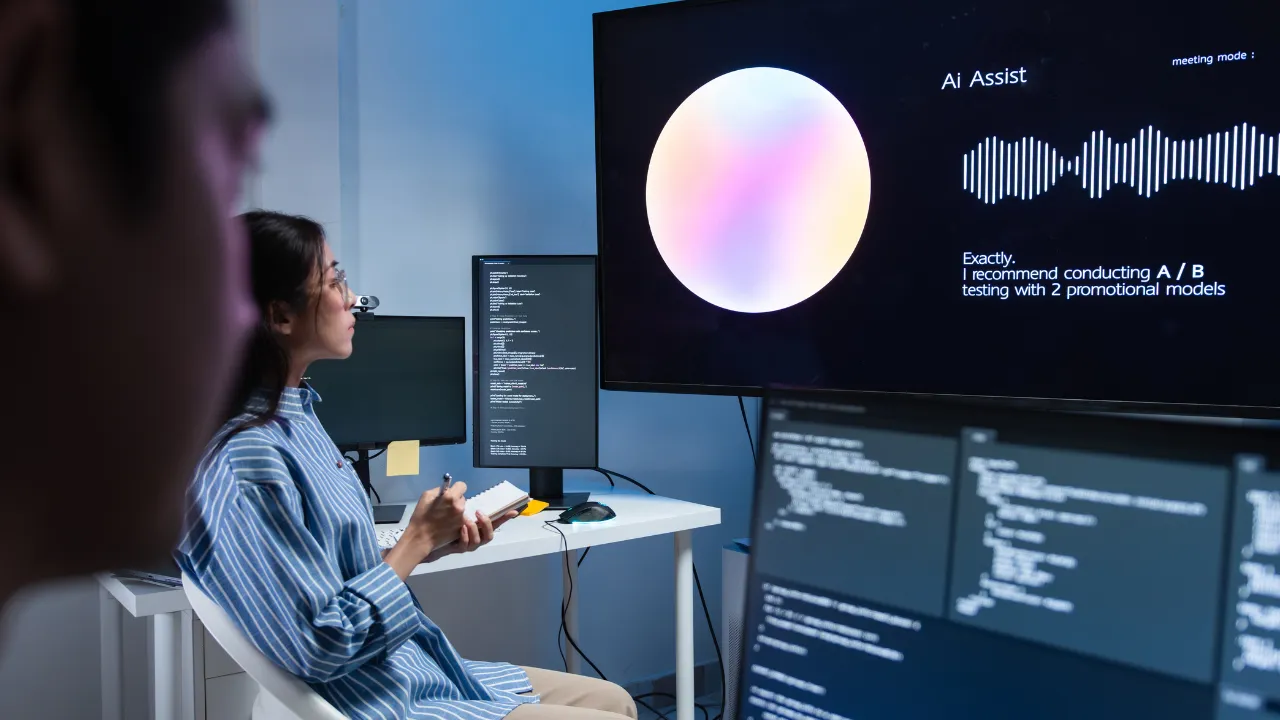
Generative AI in healthcare — LLMs, clinical documentation, patient communication
🧠

Large Language Models (LLMs)

LLMs generate coherent, contextually relevant text from a prompt. They summarize documents, extract structured data from unstructured text, and draft clinical, administrative, and educational content.

⚙️

Foundation Models in Production

GPT-4, Claude, and Gemini power most healthcare AI applications today. Azure OpenAI Service and Google Vertex AI are the common enterprise deployment paths for HIPAA BAA coverage.

⚠️

What LLMs Are Not

LLMs are not reliable reasoning engines for novel clinical problems and cannot learn from patient interactions without retraining. Hallucination — plausible but factually incorrect content — remains a genuine risk that shapes where they deploy responsibly.

Where They Deploy Safely Today

Safe applications cluster where AI drafts content a human reviews before use, or summarizes and extracts from existing documents rather than generating new clinical knowledge.

Real Generative AI Applications Working in Healthcare Today

Six applications delivering consistent, measurable value in production deployments across clinical and operational healthcare in 2026.

The Deployment Patterns That Make Generative AI Safe in Clinical Settings

The applications that work share design patterns. The ones that fail skip them.

Human-in-the-Loop as Standard

Retrieval-Augmented Generation (RAG)

Narrow Task Scoping

Red-Teaming Before Deployment

The Numbers Behind Generative AI in Healthcare

Hover to see the impact metrics from production deployments across clinical and operational use cases.

Where Generative AI Is Still Finding Its Footing

The hype cycle has passed. These are the honest limitations clinical leaders need to understand before making deployment decisions.

Real-Time Clinical Decision Support

Using an LLM to answer diagnostic or treatment questions at the point of care remains high-risk. Models can produce confidently wrong answers hard to distinguish from correct ones — exactly where hallucination risk is most dangerous.

Fully Autonomous Clinical Workflows

AI agents taking actions in clinical systems without human review are not widely deployed in 2026. The technology is capable; validation frameworks for clinical safety are not yet mature for consequential actions.

Live Patient Data Access Without Explicit Context

LLMs have no access to live patient data unless it is provided in the prompt. Deployments that assume the model "knows" current patient status without structured retrieval are unreliable — RAG is not optional for patient-specific applications.

Real-Time Learning from Patient Interactions

Foundation models cannot learn from specific patient interactions without retraining. Ongoing AI governance and periodic retraining are required infrastructure, not optional features.

General-Purpose vs Healthcare-Specific Models

The practical question is which model performs best on your specific use case — evaluated through testing, not vendor claims.

Book a Generative AI Consultation
GPT-4
General-purpose LLM with strong medical knowledge. Azure OpenAI Service provides HIPAA BAA coverage and performs well on clinical NLP tasks when well prompted.
Claude
Anthropic's Claude models offer strong reasoning and long-context handling — useful for summarizing lengthy clinical documents and multi-document synthesis tasks.
Gemini
Google's Gemini via Vertex AI is the HIPAA-covered deployment path for Google models, with native integration into Google Cloud's Healthcare API for FHIR-structured data.
Fine-tuned
Models fine-tuned on clinical data may outperform general-purpose models on specialized terminology and EHR workflow tasks. Evaluate by use case, not category.
RAG
Retrieval-augmented generation grounds LLM responses in verified clinical reference content — formulary, guidelines, institutional protocols. The primary architectural strategy for reducing hallucination risk.
Test it
Well-prompted general-purpose LLMs often match healthcare-specific models. The gap varies by task — evaluate through rigorous testing on your actual use case.

How to Deploy Generative AI in Healthcare Responsibly

Five steps that separate responsible deployments from the ones that generate headlines for the wrong reasons.

  • Scope the Task Narrowly Before Selecting a Model

    Scope the Task Narrowly Before Selecting a Model

    Scope the Task Narrowly Before Selecting a Model

    Define exactly what the AI will and will not do before evaluating models. Note generation, prior auth drafting, and data extraction each need different evaluation criteria — broad interfaces are where reliability degrades.

  • Build Human Review Into the Workflow Before Go-Live

    Build Human Review Into the Workflow Before Go-Live

    Build Human Review Into the Workflow Before Go-Live

    Design human review as a first-class workflow component — who reviews, at what point, with what authority to correct. Applications that work in production design this in; the ones that fail treat it as an afterthought.

  • Red-Team Before Deployment

    Red-Team Before Deployment

    Red-Team Before Deployment

    Probe the system for failure modes before any clinical users see it — adversarial prompts, edge cases, dangerous outputs. Failures found in testing are far cheaper than those found in production with real patient consequences.

  • Establish Model Governance Infrastructure

    Establish Model Governance Infrastructure

    Establish Model Governance Infrastructure

    Production generative AI requires ongoing monitoring, drift detection, and periodic retraining as guidelines and regulations change. Budget AI governance as a recurring operational cost, not a one-time deployment expense.

  • Confirm HIPAA Coverage for Every Component

    Confirm HIPAA Coverage for Every Component

    Confirm HIPAA Coverage for Every Component

    Every component touching PHI needs BAA coverage — the foundation model API, the RAG vector database, and logging. Azure OpenAI, Vertex AI, and major vector database providers offer BAAs; confirm scope before data flows.

Compliance Standards That Apply to Generative AI in Healthcare

Every component of a healthcare generative AI stack that touches PHI is in scope. These are the frameworks governing responsible deployment in 2026.

Privacy

PHI & Data Privacy

BAAs required for every AI provider touching PHI — foundation model API, vector database, logging.

  • HIPAA Privacy Rule
  • HITECH
  • GDPR
  • State Health Data Laws
Security

Security & Audit

Access controls, encryption in transit and at rest, and audit logging for every PHI access — including AI-generated outputs.

  • HIPAA Security Rule
  • SOC 2 Type II
  • ISO/IEC 27001
  • Audit Logging
AI Governance

AI Safety & Governance

Emerging frameworks for AI transparency, bias detection, and model accountability in clinical settings.

  • FDA AI/ML Guidance
  • EU AI Act (Class III)
  • ONC HTI-1 Rule
  • Model Cards
Medical Device

SaMD Considerations

Clinical decision support AI may meet the FDA's Software as a Medical Device definition. Determine the regulatory pathway before architecture.

  • FDA SaMD Guidance
  • De Novo / 510(k)
  • Clinical Validation
  • Post-Market Surveillance
Interoperability

Data Standards

The integration standards that connect generative AI outputs back into the clinical record and downstream workflows.

  • FHIR R4
  • HL7 v2
  • SMART on FHIR
  • CDA / C-CDA
Ethics

Bias & Fairness

Models must be validated across demographic groups before clinical deployment — bias in training data becomes bias in clinical output.

  • Bias & Fairness Testing
  • Demographic Validation
  • Explainability
  • Diverse Training Data

Generative AI in Healthcare Today Who Is Deploying

Every part of the healthcare ecosystem is evaluating generative AI. The organizations making the most progress started with narrow, high-evidence use cases and built governance infrastructure before expanding scope.

Ambient Documentation at Scale
Patient Portal AI
CDI & Coding Programs
Start With the Use Case, Not the Model.

Organizations getting real value from generative AI in healthcare start with a narrowly scoped use case — ambient documentation, prior auth drafting, structured extraction — and build human review and AI governance before expanding. Our healthcare AI engineers help health systems, payers, and digital health companies evaluate, architect, and deploy generative AI responsibly.

Book a Free Consultation

AI Readiness

Award-Winning AI Development & Consulting

2025

100 Fastest Growth Companies

2025

Global Spring Winner

2025

Top App Development Company

2024

AWS Partner Network

2024

Google Cloud Partner

2025

Highly Rated on Trustpilot

2024

Verified Agency

2024

Top App Development Company

2024

ASSOCHAM Member

Generative AI in Healthcare FAQ

[ 1 ]

How do healthcare organizations manage the hallucination risk of LLMs?

The primary strategy is human review before any AI-generated content is used clinically — clinicians review notes before signature, staff review prior auth drafts before submission. Teams add RAG to ground responses in verified clinical reference content and red-team before deployment to surface failure modes. RAG and human review together address most hallucination risk in well-scoped applications.

[ 2 ]

What is the difference between general-purpose LLMs and healthcare-specific models?

General-purpose LLMs like GPT-4 and Claude carry significant medical knowledge from broad training data; healthcare-specific models are fine-tuned on clinical data for specialized tasks. In practice, well-prompted general-purpose LLMs often perform comparably on many clinical NLP tasks, though the gap varies by task. Evaluate through testing on your actual use case, not by model category.

Global presence

Two offices. One team.

Hi, I'm ARIA. Ask me anything about Bonami's AI agents.