



Patient-Facing Mobile Apps
Booking, care plans, secure messaging.









Native iOS and Android healthcare apps for patients, clinicians, and multi-location care teams. Built for real clinical environments, not demos.
Booking, intake, results, refills, and secure messaging.
Bedside rounds, results review, referrals, and documentation, fast.
Native video visits, async messaging, remote triage, waiting rooms.
Multi-location platforms with SSO, role-based access, EHR integration.
Native iOS and Android, offline-first, WCAG 2.1 AA compliant.
PHI encryption, audit logging, and per-sprint security reviews.
Native iOS and Android apps built for real clinical use.
Booking, care plans, secure messaging.
Mobile EHR, rounding, e-prescribing.
Video consults, triage, waiting rooms.
BLE wearables with real-time alerts.
Proven frameworks plus healthcare-specific tooling, picked around your workflows and compliance scope.
 S
Swift
S
Swift
 K
Kotlin
K
Kotlin
 R
React Native
R
React Native
 F
Flutter
F
Flutter
 T
TypeScript
T
TypeScript
 I
Ionic
I
Ionic
 X
Xamarin
X
Xamarin
 N
NativeScript
N
NativeScript
 N
Node.js
N
Node.js
 D
Django
D
Django
 A
ASP.NET Core
A
ASP.NET Core
 L
Laravel
L
Laravel
 E
Express.js
E
Express.js
 G
GraphQL
G
GraphQL
 R
REST APIs
R
REST APIs
 A
Apache Kafka
A
Apache Kafka
 M
MuleSoft
M
MuleSoft
 D
Dell Boomi
D
Dell Boomi
 A
Apigee
A
Apigee
 A
AWS
A
AWS
 M
Microsoft Azure
M
Microsoft Azure
 G
Google Cloud
G
Google Cloud
 D
Docker
D
Docker
 K
Kubernetes
K
Kubernetes
 T
Terraform
T
Terraform
 J
Jenkins
J
Jenkins
 D
Datadog
D
Datadog
 P
PostgreSQL
P
PostgreSQL
 M
MongoDB
M
MongoDB
 M
MySQL
M
MySQL
 R
Redis
R
Redis
 D
DynamoDB
D
DynamoDB
 E
Elasticsearch
E
Elasticsearch
 D
Databricks
D
Databricks
 S
Snowflake
S
Snowflake
 O
OAuth 2.0
O
OAuth 2.0
 S
SSL/TLS
S
SSL/TLS
 O
Okta
O
Okta
 A
Azure AD
A
Azure AD
 A
AWS KMS
A
AWS KMS
 A
Azure Key Vault
A
Azure Key Vault
 H
HashiCorp Vault
H
HashiCorp Vault
 S
Snyk
S
Snyk
Real apps, real clinical constraints, measurable outcomes.
Patient engagement & follow-up

A delivery process shaped by real clinical environments — where every decision is made before we write a single line of code.
We interview real users, map real workflows, and document every constraint — device policies, network environments, accessibility requirements — before design begins.
We design for glanceability, error prevention, and accessibility — following WCAG standards and designing for users managing their health under stress or cognitive load.
Swift for iOS. Kotlin for Android. No compromises on platform behaviour, push notification reliability, or device integration. We're upfront when cross-platform is genuinely appropriate.
We build or integrate the backend infrastructure, FHIR-compliant APIs, and EHR connections — Epic, Cerner, Athenahealth, or your proprietary system — that make the app functionally useful.
Every feature is reviewed against HIPAA requirements as it's built. We implement encryption, role-based access controls, audit logging, and MFA. Penetration testing runs before launch, not after.
We test with clinical staff and real patients — not just QA engineers — before anything goes to the app store.
We handle the full submission process for the Apple App Store and Google Play — including healthcare-specific compliance, metadata, and review preparation.
We monitor crash reports, performance metrics, and user feedback from day one. We run rapid update cycles based on how people actually use the app.
In healthcare, "almost works" isn't good enough. Here's what that conviction changes about how we build.
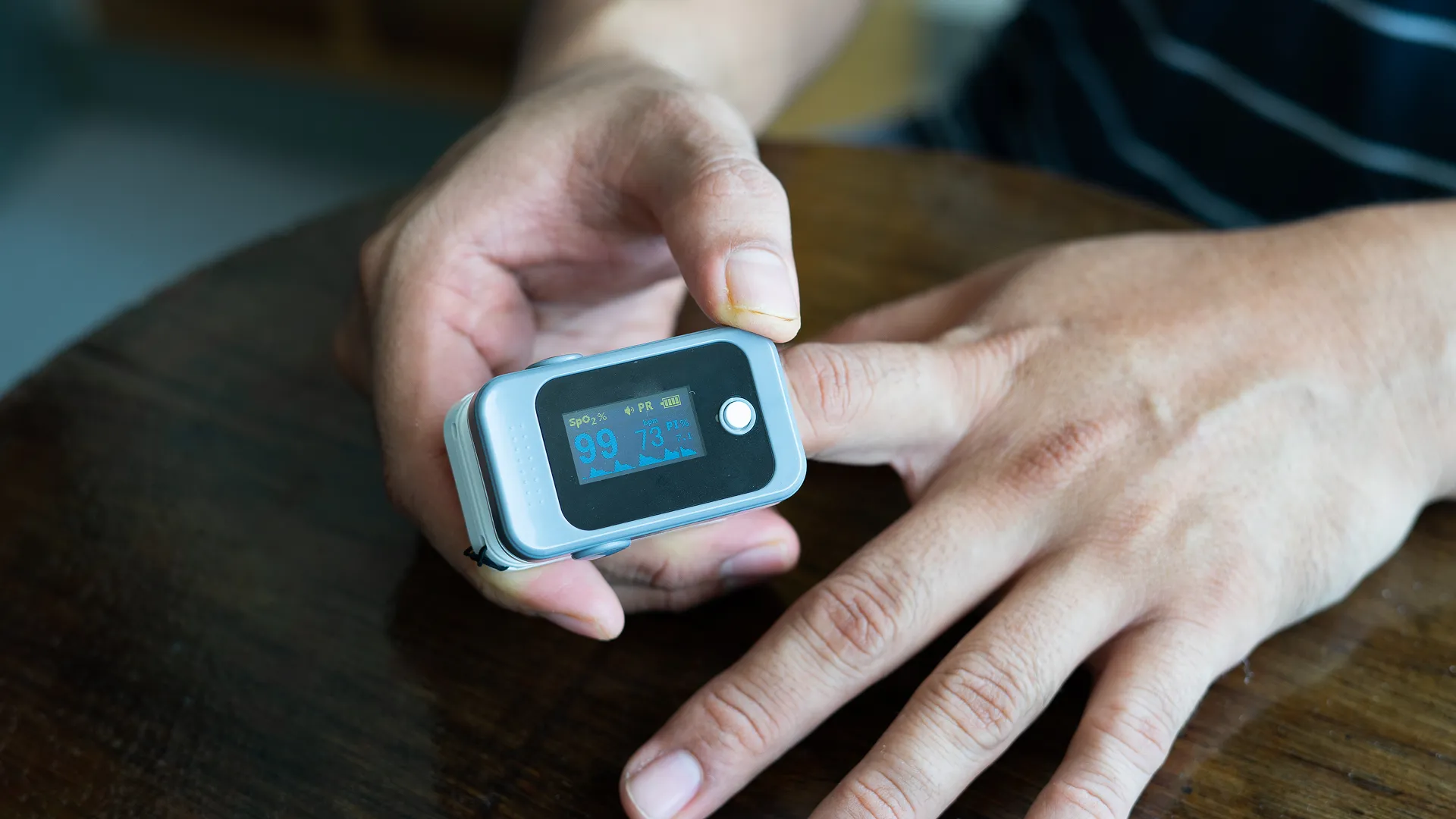
Sync failures and notification delays can mean a missed medication alert. Native iOS and Android eliminates the abstraction layer that causes them.

Our design process is built around clinical workflow validation — so what we build fits how providers and patients actually work.

We make HIPAA decisions during architecture — data storage, authentication, audit trails, and SDK access — not after launch.

One integrated team from discovery through post-launch — no handoff gaps, no outsourced QA, no lost context.

We've used AI for documentation, risk stratification, and scheduling — and pushed back when simpler logic was safer. That judgment matters most in healthcare.

We partnered with Bonami to build a patient engagement and remote-monitoring app. The team was proactive, transparent, and detail-oriented across UX, engineering, and security — the result is an app our clinicians trust and patients actually use.
”
They understood clinical workflows without a translation layer. Our nurses got a fast, offline-capable iOS and Android app that holds up on hospital Wi-Fi, and it integrated cleanly with our EHR over FHIR.
”
Compliance was built in from day one. HIPAA controls, audit logging, and security reviews every sprint meant our risk and IT teams signed off without the usual back-and-forth.
”Every app we build meets your compliance, security, and IT standards.


Tell us what you're building. One 30-minute call to understand your clinical context and constraints — then an honest picture of what it takes to build it right.
Book a Discovery Call
100 Fastest Growth Companies
Global Spring Winner
Top App Development Company
AWS Partner Network
Google Cloud Partner
Highly Rated on Trustpilot
Verified Agency
Top App Development Company
ASSOCHAM Member
Native is the right call for most clinical apps — device integrations and push are far more reliable.
Beyond encryption: session timeouts, crash logs, analytics SDKs, and app switcher screenshots all factor in.
Yes — Epic, Cerner, Athenahealth, Meditech, and proprietary systems via HL7 FHIR and HL7 v2.
A single-workflow app takes 4–6 months; a full clinical platform 9–15 months.
Yes — parallel tracks on a shared API layer keep behaviour native on each platform.
We monitor performance, crashes, and engagement; most clients stay well beyond launch.
Yes — HIPAA-aware agents for intake, documentation, and revenue cycle work. See our guide to the best AI agent development companies.
Get in touch
One 30-minute call, then an honest build assessment.