


Contract Ingestion & Legal AI
Auto-ingests from Salesforce CPQ, HubSpot, DocuSign, Ironclad, and Conga.








End-to-end ASC 606 / IFRS 15 automation — from contract ingestion to ERP posting.
Auto-ingests from Salesforce CPQ, HubSpot, DocuSign, Ironclad, and Conga.
Identifies all distinct obligations — licenses, services, support, hardware.
Calculates transaction price with constrained variable consideration.
Schedules SaaS, term license, milestone, and usage revenue automatically.
Native connectors for SAP RAR, Oracle Fusion, NetSuite, Workday, and Zuora.
Immutable log captures every allocation and SSP decision.
End-to-end ASC 606 / IFRS 15 automation — from contract ingestion to ERP posting.
Auto-ingests from Salesforce CPQ, HubSpot, DocuSign, Ironclad, and Conga.
Identifies all distinct obligations — licenses, services, support, hardware.
Calculates transaction price with constrained variable consideration.
Schedules SaaS, term license, milestone, and usage revenue automatically.
Native connectors for SAP RAR, Oracle Fusion, NetSuite, Workday, and Zuora.
Immutable log captures every allocation and SSP decision.
Our AI Agent allocates revenue in strict ASC 606 / IFRS 15 conformance, with Big 4-ready audit documentation generated automatically.
Get Revenue Assessment
Runs the full five-step ASC 606 process without human intervention, posting recognised and deferred entries automatically.
Handles subscriptions, multi-year licenses, usage overages, and bundles — with SSP re-allocation on contract modifications.
Generates contemporaneous ASC 606 documentation per contract, cutting 15–25 hours of workpaper prep each close.
The AI Revenue Recognition Agent connects to leading ERP, CRM, billing, and CPQ platforms.
AI development with measurable impact.

We build on leading foundation and domain models, evaluated continuously.
100 Fastest Growth Companies
Global Spring Winner
Top App Development Company
AWS Partner Network
Google Cloud Partner
Highly Rated on Trustpilot
Verified Agency
Top App Development Company
ASSOCHAM Member
Real results from enterprises that have deployed Bonami's AI solutions across industries.
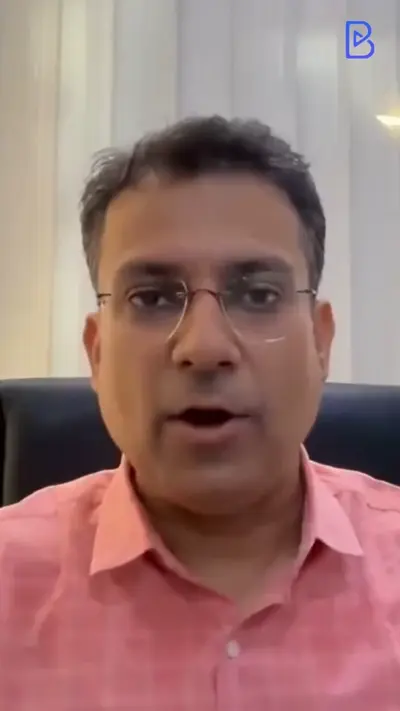
We had over a million PDFs to process and more than 20 million rows of data to extract. Bonami delivered it in just two weeks, at roughly one-fifth of what the market was quoting us.

Everything enterprise finance, accounting, and revenue operations leaders need to know about deploying an AI Revenue Recognition Agent under ASC 606 and IFRS 15.
Contact Our TeamIt runs the full ASC 606 / IFRS 15 five-step process per contract — ingesting from CRM and billing, allocating price by SSP, and posting ERP journals with a full audit trail.
It picks the correct ASC 606 treatment — separate contract, termination-and-new, or cumulative catch-up — and reschedules in under 60 seconds instead of 2–4 hours.
SaaS and subscription, professional services, multi-element bundles, and hardware — under both ASC 606 and IFRS 15 with dual-ledger scheduling.
It auto-selects among the three ASC 606 methods — observable price, adjusted market assessment, or cost plus margin — with live SSP benchmarks and drift alerts.
Native bi-directional connectors cover Salesforce CPQ, DocuSign, Zuora, Stripe, SAP RAR, Oracle Fusion, and NetSuite; custom adapters ship in 2–3 weeks.
Revenue disaggregation, contract balances, RPO schedules, and SSP judgments — generated automatically in XBRL for SEC filings and Big 4 workpapers.
8–12 weeks for 500–5,000 active contracts — integration, SSP benchmarking, parallel run, phased go-live; 14–18 weeks beyond 5,000.
Closes drop from 35–50 hours to 5–8 hours of exception review — $180K–$400K in annual savings, with payback typically in 3–5 months.
Rule-based subledgers break on modified contracts. Bonami's software reads contracts with legal NLP and recognises revenue without per-contract configuration.
Yes. Dual-ledger scheduling runs ASC 606 and IFRS 15 in parallel from one portfolio, flagging any treatment that differs for controller review.








 PaLM-2
 Claude
 Gemini
 Midjourney
 InstructGPT
 Flan
Flan XLM
XLM XLNet
XLNet Turing NLG
 Alpaca
 Gemma
Gemma Orca
Orca Llama 3
 Sora
Sora BERT
BERT T5
T5 RoBERTa
 ALBERT
 Megatron-LM
 Whisper
 Stable Diffusion
 Phi-2
Phi-2 Vicuna
 Mistral
 Bloom
Bloom Falcon
 Grok
Grok WizardLM
 DeepSeek
 Perplexity
 Mixtral 8x7B
 Jasper
 Pix2Pix
 Ernie Bot
 Anthropic Haiku
 Kosmos
 Muse
Muse Imagen
 ControlNet
 DreamFusion
 AudioCraft
 LLaVA
LLaVA DeepMind Flamingo
 DeepSpeed
 Open-Assistant
 DenseNet
 TabNet