
See what our clients say about working with Bonami Software across 200+ projects for 18+ industries. EXPLORE NOW!
We don't just build software. We deliver results. EXPLORE NOW!
See why businesses choose Bonami Software for reliable, scalable solutions. EXPLORE NOW!
We turn ideas into scalable products with proven delivery across 18+ industries. EXPLORE NOW!
See what our clients say about working with Bonami Software across 200+ projects for 18+ industries. EXPLORE NOW!
We don't just build software. We deliver results. EXPLORE NOW!
See why businesses choose Bonami Software for reliable, scalable solutions. EXPLORE NOW!
We turn ideas into scalable products with proven delivery across 18+ industries. EXPLORE NOW!

Medical Images Need to Reach the Right Clinicians. Every Time.

We build DICOM integration infrastructure that connects PACS systems to EHRs, AI platforms, and provincial imaging networks — using DIMSE and DICOMweb protocols implemented to each system's Conformance Statement.

BrowserStack
Persistent
Yatra
Kellton
Jade Global
Optum
PokerBaazi
Walmart
BrowserStack
Persistent
Yatra
Kellton
Jade Global
Optum
PokerBaazi
Walmart

Book an Imaging Integration Consultation

Talk to our imaging team about your PACS environment. We reply within 24 hours.

  • We respond within 24 hours, fully NDA-protected.
BrowserStack
Persistent
Yatra
Kellton
Jade Global
Optum
PokerBaazi
Walmart
BrowserStack
Persistent
Yatra
Kellton
Jade Global
Optum
PokerBaazi
Walmart

Trusted by startups and global leaders

BrowserStack
Persistent
Yatra
Kellton
Jade Global
Optum
PokerBaazi
Walmart
BrowserStack
Persistent
Yatra
Kellton
Jade Global
Optum
PokerBaazi
Walmart

Three Systems at the Center of Medical Imaging Integration

PACS stores and serves the images. VNA preserves and shares them across facilities. DICOMweb makes both accessible to modern applications. Understanding which system you are integrating with shapes every technical decision that follows.

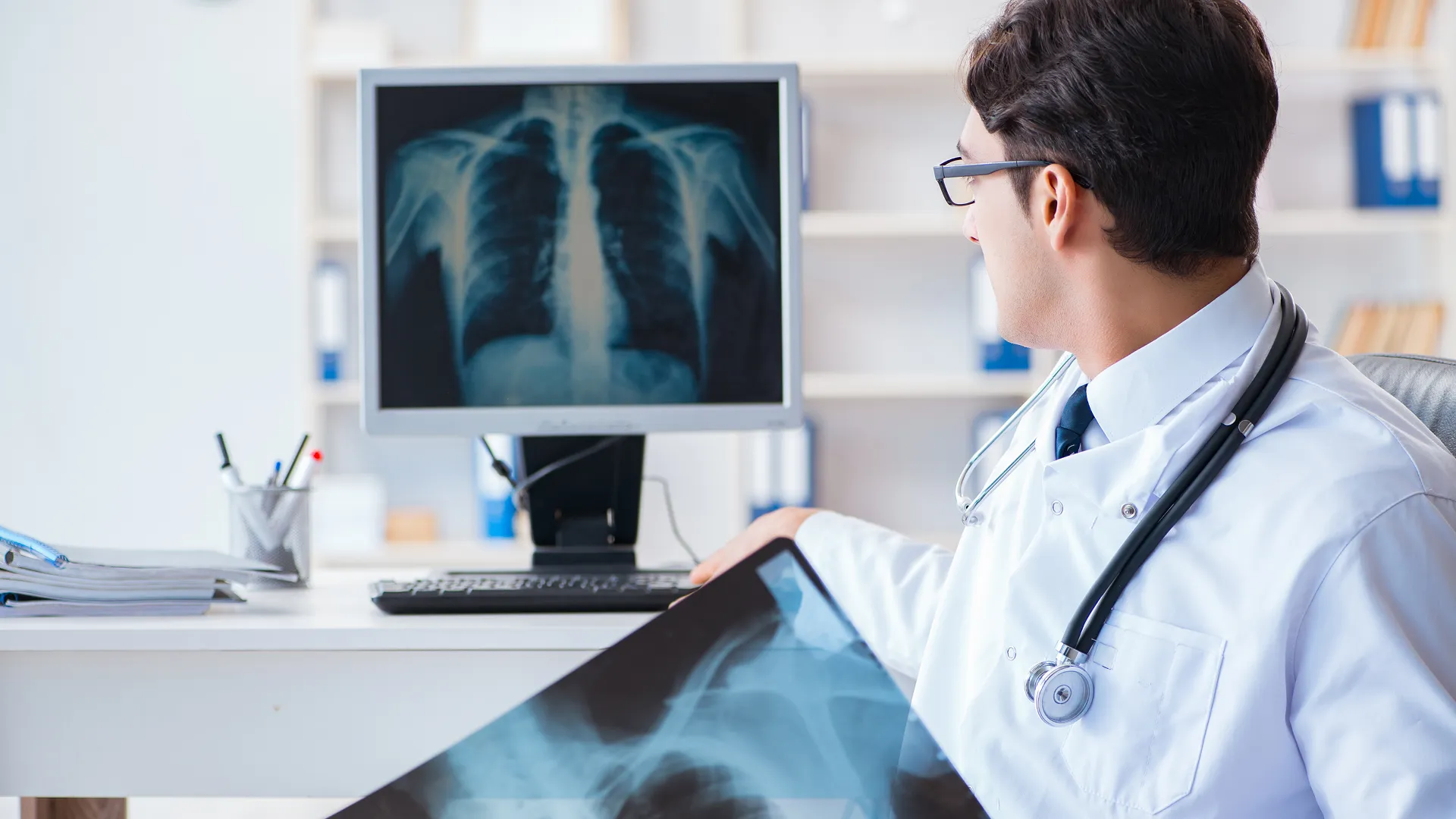
Radiology team reviewing medical images from PACS
🖥️

PACS — The Operational Imaging System

The system of record for imaging in a radiology department. Stores DICOM files, manages the radiologist worklist, and serves images to reading workstations. Communicates via DIMSE for high-speed in-network transfer and increasingly via DICOMweb for modern integrations.

🗄️

VNA — Long-Term Archive & Cross-Facility Sharing

Vendor-neutral archive designed for cross-facility image sharing and long-term preservation. Health systems use VNAs to consolidate archives from multiple PACS vendors and give every facility in the network access to a patient's full imaging history.

🌐

DICOMweb — REST-Based Imaging for Modern Platforms

RESTful web services (WADO-RS, STOW-RS, QIDO-RS) that make DICOM data accessible over standard HTTP. Essential for cloud-hosted AI platforms, web-based viewers, and any application that needs imaging data without a persistent DIMSE TCP connection.

What PACS and Imaging Integration Actually Covers

Medical imaging integration is more than connecting to a PACS. It spans order workflow, image retrieval, AI pipelines, report delivery, and cross-facility sharing — each with its own DICOM service classes, conformance requirements, and clinical workflow implications.

EHR to PACS Order Integration (Modality Worklist)

DICOM Modality Worklist integration carries order information from the HIS to the imaging modality before the patient arrives, pre-populating patient demographics and procedure details on the scanner. Eliminates manual data entry by the technologist — a primary source of demographic errors that cause images to be stored under incorrect patient identifiers.

Medical Imaging Integration Touches Every Clinical Specialty

Hover to explore the scale, standards, and clinical stakes behind PACS integration in 2026.

Who This Is For

We build PACS integration infrastructure for health systems, imaging AI companies, teleradiology platforms, and digital health teams serving Canadian provincial networks. Hover a card to see how we work with each.

Hospitals & Health Systems

Imaging AI Companies

Teleradiology Platforms

Digital Health Teams in Canada

The PACS Integration Process

Five steps from architecture assessment to clinical validation. Most image display failures trace to decisions made or skipped in the first three. Hover or tap a step to see what it involves.

  • Architecture Assessment

    Architecture Assessment

    Architecture Assessment

    Map the imaging environment: PACS vendor, VNA presence, modalities, and clinical viewers. Review DICOM Conformance Statements to confirm supported service classes and transfer syntaxes before writing any integration code.

  • AE Title Registration

    AE Title Registration

    AE Title Registration

    Register the application's AE title with the PACS and configure network parameters. Register the PACS in the application so queries route to the correct endpoint. Mutual registration is required before any DICOM communication can occur.

  • Transfer Syntax Agreement

    Transfer Syntax Agreement

    Transfer Syntax Agreement

    Agree on transfer syntaxes — the compression and encoding formats for pixel data — between sender and receiver. Mismatches are the most common cause of image display failures and must be resolved during testing, not after deployment.

  • Image Routing Configuration

    Image Routing Configuration

    Image Routing Configuration

    Configure routing rules that filter studies by modality, body part, or facility before they reach the application. AI tools processing specific study types need precise routing to avoid being overwhelmed by irrelevant data.

  • Clinical Validation & Performance Testing

    Clinical Validation & Performance Testing

    Clinical Validation & Performance Testing

    Test with real studies across all modalities and study sizes expected in production. Validate query response times, transfer rates, and AI latency. For diagnostic AI, confirm results surface in the radiologist's workflow at the right point before go-live.

Standards That Medical Imaging Integration Actually Runs On

Every protocol is implemented directly — DIMSE service classes, DICOMweb REST services, HL7 report delivery, and FHIR imaging resources — so the integration works with the PACS and clinical systems already in place.

DIMSE

DICOM DIMSE Service Classes

Traditional DICOM communication over persistent TCP connections — the protocol family deployed in virtually every hospital PACS environment.

  • C-STORE (Image Storage)
  • C-FIND (Query)
  • C-MOVE (Retrieve)
  • C-GET (Retrieve)
  • Modality Worklist (MWL)
  • Storage Commitment
DICOMweb

DICOMweb REST Services

RESTful imaging services over standard HTTP — enabling DICOM access from cloud platforms, web viewers, and AI applications.

  • WADO-RS (Image Retrieval)
  • STOW-RS (Image Storage)
  • QIDO-RS (Study Query)
  • UPS-RS (Worklist)
AI Results

AI Result Object Types

DICOM result formats for returning AI analysis findings into the radiologist's workflow.

  • DICOM Structured Reports (SR)
  • Secondary Capture (SC)
  • Presentation States (PR)
  • DICOM SEG (Segmentation)
Report Delivery

Radiology Report Integration

Protocols for delivering finalized radiology reports from the reporting system to the ordering provider and EHR.

  • HL7 v2 MDM (Document Notification)
  • HL7 v2 ORU (Result Delivery)
  • FHIR DiagnosticReport
  • FHIR ImagingStudy
PACS Vendors

PACS Systems We Integrate With

Major PACS platforms deployed across U.S. and Canadian hospital environments.

  • Sectra IDS7
  • Philips IntelliSpace
  • GE Centricity PACS
  • Agfa Enterprise Imaging
  • Intelerad
  • Fujifilm Synapse
Provincial (CA)

Canadian Provincial Imaging Networks

Provincial imaging infrastructure enabling province-wide image access from a single integration.

  • BC Provincial PACS (PHSA)
  • Ontario DPIR
  • Alberta Provincial PACS
  • ConnectingOntario Imaging
  • Saskatchewan eHealth
Imaging Data Should Follow the Patient. Let's Build That Infrastructure.

DIMSE or DICOMweb, hospital PACS or provincial network, diagnostic AI or teleradiology — we build the DICOM integration layer that gets medical images to the right systems at the right time. Book a consultation and we will tell you what a production-ready PACS integration looks like for your environment.

Book an Imaging Integration Consultation
AI Readiness

Award-Winning AI Development & Consulting

2025

100 Fastest Growth Companies

2025

Global Spring Winner

2025

Top App Development Company

2024

AWS Partner Network

2024

Google Cloud Partner

2025

Highly Rated on Trustpilot

2024

Verified Agency

2024

Top App Development Company

2024

ASSOCHAM Member

Frequently Asked Questions

[ 1 ]

What is the difference between a PACS and a VNA?

A PACS handles day-to-day radiology workflow — image display, worklist, and reporting. A VNA is a long-term archive optimized for storage and cross-facility sharing. Many health systems run both. Both communicate over DICOM, but VNAs have broader interoperability and accept connections from outside the originating health system.

[ 2 ]

What does an AI company need to connect to a hospital PACS?

Technically: a DICOM interface for C-STORE or DICOMweb, an AE title registered with the PACS, and the ability to return results as Structured Reports, Secondary Capture, or Presentation States. Administratively: a BAA, security policy compliance, and sign-off from radiology and clinical informatics. FDA-cleared algorithms typically require clearance documentation as part of the health system's internal approval.

[ 3 ]

How is DICOMweb different from traditional DICOM, and when should each be used?

DIMSE uses persistent TCP connections and binary messaging — suited for high-volume, high-speed transfers within a hospital network. DICOMweb (WADO-RS, STOW-RS, QIDO-RS) exposes DICOM over standard HTTP, making imaging data accessible from cloud platforms, web viewers, and AI applications. Most modern PACS systems support both.

[ 4 ]

How do Canadian provincial imaging networks affect integration planning?

In provinces with centralized PACS infrastructure — BC, Ontario, Alberta — a single provincial connection reaches all participating facilities, eliminating per-hospital negotiations. The tradeoff: provincial access requires formal data access agreements with the health authority, and governance takes longer than a single-institution connection. Teams that plan for this timeline from the start avoid deployment delays.

Global presence

Two offices. One team.

Hi, I'm ARIA. Ask me anything about Bonami's AI agents.