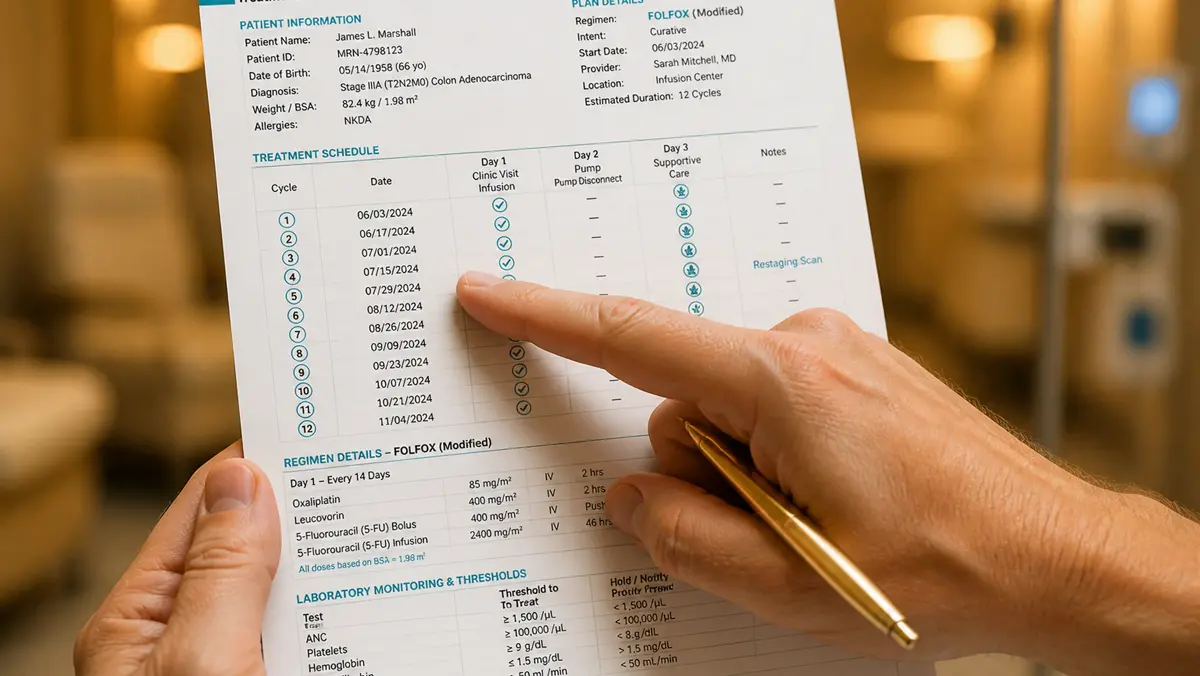
Evidence-Based Reviews — Not Recency-Biased Narratives
Builds a full-period evidence timeline before writing, so Q1 work counts as much as Q4 — no recency bias.








People & HR
The average manager spends 210 hours per year on performance activities — yet fewer than 30% of companies believe their process delivers value (McKinsey), and only 14% of employees feel their review inspires improvement (Gallup).
Reviews rely on memory under deadline pressure, reflecting the last 4–6 weeks rather than the full year. Research consistently shows manually-written reviews contain measurable gender, racial, and seniority biases that compound into promotion and retention disparities.
210h Bonami's AI Performance Review Summarizer cuts manager prep time by 70%, producing evidence-grounded, bias-checked, calibration-ready narratives in minutes. Book an assessment to model your specific time savings.
Business impact
70%
reduction in manager time spent on performance review preparation — validated across enterprise deployments in technology, financial services, and professional services
Six capability pillars — from feedback ingestion and AI-generated narratives to bias detection and calibration prep.
Ingests every performance signal simultaneously: self-assessments, peer and 360-degree feedback, upward feedback, manager notes, continuous check-in records, and informal feedback from performance platforms.
Generates structured review narratives mapped to your competency framework, review template, and rating scale — not generic summaries requiring complete rewriting.
Scans every review — AI-generated drafts and human edits — for gendered adjectives, attribution asymmetry, doubt-raising language, ability vs. effort framing, and vague praise without evidence.
Generates standardised calibration packs for every manager and department: rating distribution, ranked summaries, evidence quality scores, and peer consistency analysis.
Native connectors for Workday HCM, SAP SuccessFactors, Oracle HCM Cloud, ADP Workforce Now, and BambooHR — bi-directional sync of profiles, templates, feedback, and completed reviews.
Review cycle dashboard: completion rates, time-to-completion, narrative evidence density, bias flag rates, and calibration adjustment magnitude across the organisation.

Builds a full-period evidence timeline before writing, so Q1 work counts as much as Q4 — no recency bias.
Flags vague praise, doubt-raising language, and other bias patterns before reviews reach the employee.
Standardised AI review packs make every write-up comparable, so calibration stays data-driven at any headcount.
Integrations
The AI Performance Review Summarizer connects to leading HRIS, performance management, and goal-tracking platforms.
7 named systems it connects to
Running something not listed here? Tell us on the call — scoping the connector is the first step.
 AI Performance Review Summarizer
 Workday
 SAP SuccessFactors
 Oracle HCM
 Lattice
 Culture Amp
 BambooHR
 MS Teams
Screen 250+ applications in minutes, score skills against each role and surface top talent faster with Bonami X AI's candidate matching agent for…
View agentRun I-9 checks, background screening, training and multi-jurisdiction HR compliance for every new hire with Bonami X AI's onboarding compliance agent.
View agentAutomate access requests, SoD conflict detection and provisioning with Bonami X AI's access request agent.
View agentIt ingests every performance signal — self-assessments, peer feedback, manager notes, check-ins, and goal data — into a structured, evidence-grounded draft the manager refines. It also scans for bias and prepares calibration documentation, cutting manager prep time by 70%.
The draft is grounded in specific, attributable evidence, not generic phrases, with each section referencing real events and outcomes. Tone and formality match your review culture, and managers edit the evidence-rich draft in their own voice — saving 60–80% of first-draft writing time.
It applies a research-based taxonomy of evaluation bias — gendered language, attribution asymmetry, doubt-raising phrases, vague praise, and role-incongruent framing. Each flag shows the phrase, bias type, an explanation, and a suggested alternative. All flags are advisory, and aggregate reporting surfaces patterns invisible at the individual review level.
Native connectors cover Workday HCM, SAP SuccessFactors, Oracle HCM Cloud, ADP Workforce Now, and BambooHR, plus performance platforms (Lattice, Culture Amp, 15Five, Leapsome, Betterworks) and goal tools (Asana, Jira, Monday.com, Ally.io). The agent reads performance data and writes completed summaries and ratings back to your HRIS; custom connectors are available via its REST API.
360-degree feedback synthesis is a primary use case — the summarizer ingests every reviewer type (self, peers, direct reports, manager, skip-level) with appropriate weighting per source. Conflicting feedback is surfaced explicitly, with both signals and their source shown so the manager can investigate.
The summarizer is cycle-agnostic, generating summaries for any cadence in your HRIS — annual, semi-annual, quarterly, or project-based. The evidence window adjusts for shorter cycles, and continuous feedback from the year is retained and surfaced at the next formal review.
Data is processed under your existing HR vendor agreements — the agent reads and writes via authenticated HRIS APIs, with no data stored in Bonami infrastructure beyond the active session, and role-based access limits managers to their direct reports. GDPR Article 22 compliance is maintained by a human-in-the-loop design: summaries require manager review and explicit submission before any consequential decision is recorded.
ROI spans three areas: time (a 70% prep-time cut saves 147 manager-hours a year — 73,500 hours for a 500-manager org), talent quality (McKinsey links effective performance management to 24% higher performance and 40% lower attrition), and legal (bias-checked documentation cuts litigation exposure). Most organisations recover the investment within the first review cycle.
Traditional performance appraisal software just gives managers a blank template to fill in from memory. This performance review software does the synthesis — ingesting self-assessments, peer feedback, manager notes, and goal data into a structured, bias-checked draft grounded in attributable evidence from the full review period.
Yes. It functions as performance management software that connects to your existing HRIS and performance platforms rather than replacing them, with 360 feedback software capabilities that synthesize self, peer, upward, and skip-level input, weight each source, and surface conflicts. Completed summaries, ratings, and calibration outcomes write back to your system of record.
Every review cycle run on memory produces recency bias, inconsistent quality, and calibration chaos. See the AI Performance Review Summarizer process your actual feedback data and generate structured, evidence-grounded narratives — live.
Book a Demo