
Code first
Building a predictive model on market data normally starts with Python, a data pipeline and a machine learning library. That requirement filters out most of the people who actually have a market thesis worth testing.
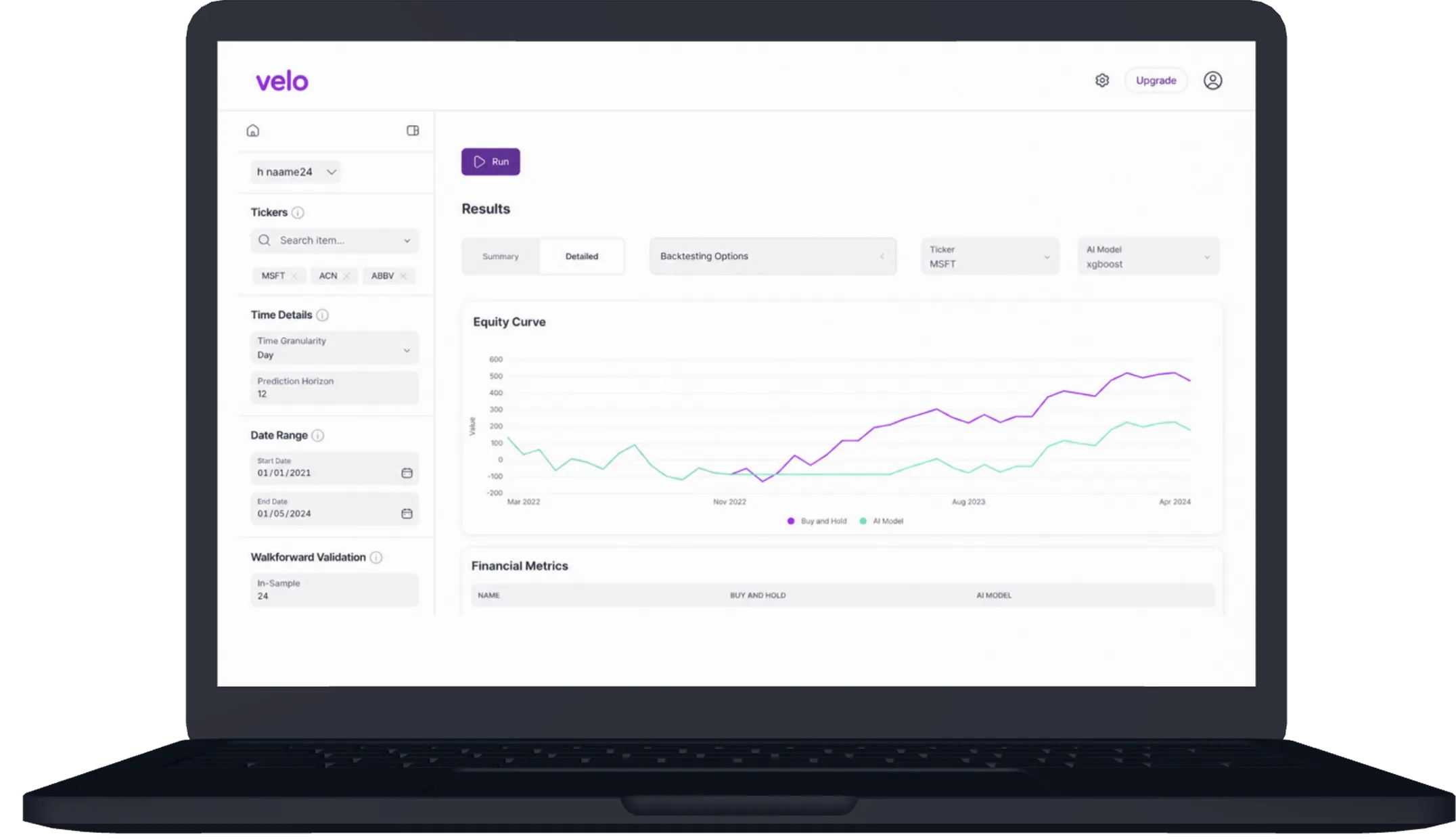
Velo Lab lets an investor build, train and validate machine learning models that predict market movement — XGBoost, LightGBM, Random Forest and LSTM — entirely through a browser, with walkforward simulation standing in for the engineering team a hedge fund would otherwise need.
Build Your AI Research PlatformVelo Lab is a research platform for quantitative trading strategies. It gives individual investors and analysts the model-building workflow that has historically belonged to institutional quant desks — feature selection, model training, backtesting and walkforward validation — without requiring them to write Python or run their own compute.
Market research tooling: the software layer between raw market data and a trading decision, where the output of a model has to be trusted before any money follows it.
The platform targets people who understand markets and want to test a hypothesis systematically, rather than developers looking for a Python library.
XGBoost, LightGBM and Random Forest cover tabular feature sets; LSTM covers sequence behaviour in price series. The interface exposes them as configurable experiments rather than as code.
Models are validated against historical data using walkforward runs that retrain and re-test in sequence, so the result reflects how a strategy would have behaved as new data arrived rather than how well it fits the past.
Training and backtesting run on cloud infrastructure so a user is not limited by their own hardware, and results return to the browser as charts rather than as files.
Scope a machine learning research or backtesting platform for your market, your data and your users.
An investor with a good hypothesis still needs feature engineering, training infrastructure, and a validation method honest enough to reject their own idea.




Applied machine learning delivered as a product, not as a notebook.
Model configuration, training, validation and interpretation are presented as an ordinary application workflow. The engineering effort goes into making the pipeline usable, not into demonstrating the algorithm.
A FastAPI and Python layer for training and evaluation sits behind a Next.js application, which keeps the data science stack and the product stack independently deployable.
Walkforward testing is the standard route through the product rather than an advanced toggle, which is what makes the platform suitable for research rather than for demonstration.
Scalable training runs are exposed to the user as a button. The infrastructure decisions — dispatch, capacity, teardown — stay inside the platform.

A digital savings account opened end to end from a phone, with video KYC replacing the branch visit.
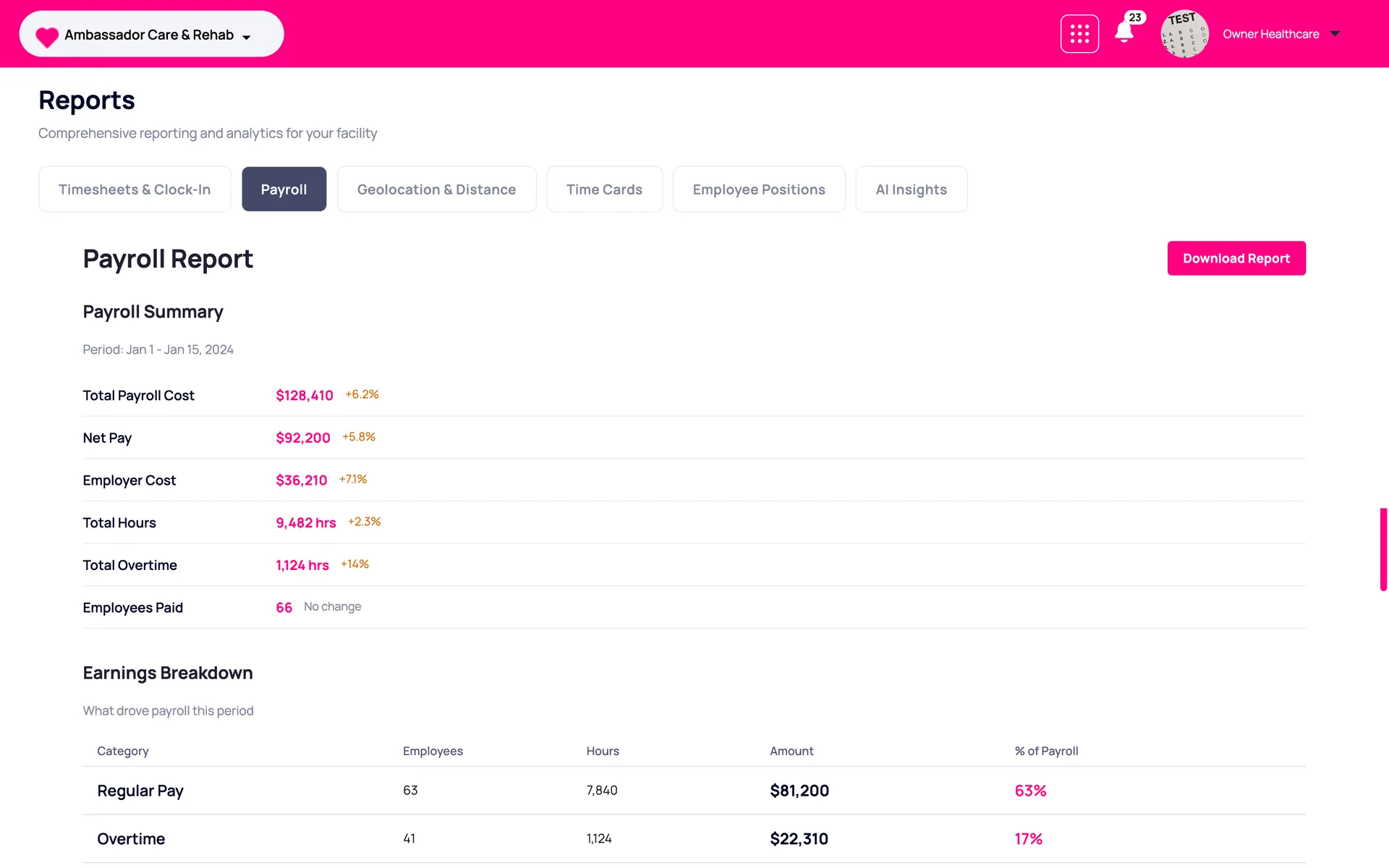
Shift scheduling, NFC and geofenced clock in, CMS PBJ compliance, in house payroll and embedded banking across five client apps.