
Key Takeaways
- Generative AI produces content when asked. Agentic AI pursues a goal, decides the steps, calls tools, checks its own work, and takes actions across your systems. One answers, the other acts.
- Agentic AI is built on top of generative models. The large language model is the reasoning engine inside the agent, so this is not an either or choice at the technology layer. It is a question of how much autonomy the workload needs.
- Use generative AI for content, drafting, summarization, and question answering where a human stays in the loop on every output. Use agentic AI for repeatable multistep workflows that span systems and where the value is in completing the work, not just suggesting it.
- The hardest engineering in an agentic system is not the model. It is the guardrails, tool integrations, and the human review points that decide what the agent may do on its own and what it must escalate.
- For most enterprises the fastest ROI comes from agentic automation of a narrow, high volume, rules heavy workflow such as claim denials or invoice exceptions, not from a general purpose autonomous assistant.
The Difference in One Minute
The shortest honest answer is this. Generative AI produces something when you ask it to. You give it a prompt and it returns text, code, an image, or a summary. It does not decide what to do next, and it does not touch your other systems. Agentic AI pursues a goal. You give it an objective, and it plans the steps, calls tools and APIs, reads the results, adjusts, and takes actions until the goal is met or it hits a checkpoint that needs a human. Generative AI answers. Agentic AI acts.
That distinction matters because it changes what you are buying, what can go wrong, and where the engineering effort goes. A generative feature is mostly a model plus a good prompt. An agentic system is a model plus planning, memory, tool access, and guardrails, wired into the systems where the work actually happens.
- Input: generative takes a prompt. Agentic takes a goal or a trigger event.
- Output: generative returns content. Agentic returns a completed task and a record of the actions it took.
- Autonomy: generative does one turn. Agentic loops, plans, and re-plans across many steps.
- Reach: generative stays inside the chat or the API call. Agentic reaches into your EHR, ERP, CRM, or ticketing system through tools.
- Risk profile: a wrong generative answer is a bad draft a human catches. A wrong agentic action can change real data, so oversight is the whole game.
How Generative AI Actually Works
Generative AI is a single request and response. A large language model, or a diffusion model for images, takes your prompt and predicts an output that fits the patterns it learned during training. Modern enterprise setups add retrieval, so the model is grounded in your own documents rather than answering from memory alone. That is what powers most of the AI features people already use every day: draft this email, summarize this contract, answer this policy question, write this SQL.
The important property is that generative AI does not carry out consequences. It hands you a result and stops. A person reads the summary, edits the draft, or copies the code. Because a human sits between the output and any real action, the failure mode is contained. The worst case of a bad answer is wasted time, not a corrupted record. That is why generative features are quick to ship and why almost every company started here.
The ceiling is also set by that same property. Generative AI makes each individual step faster, but a person still has to drive the process, move between systems, and stitch the steps together. If your bottleneck is a workflow with fifteen manual handoffs, making the writing faster helps only a little. That is the gap agentic systems are built to close. If a grounded question answering assistant or content copilot is what you need, that is a generative AI development project, and it is the right starting point for many teams.
How Agentic AI Actually Works
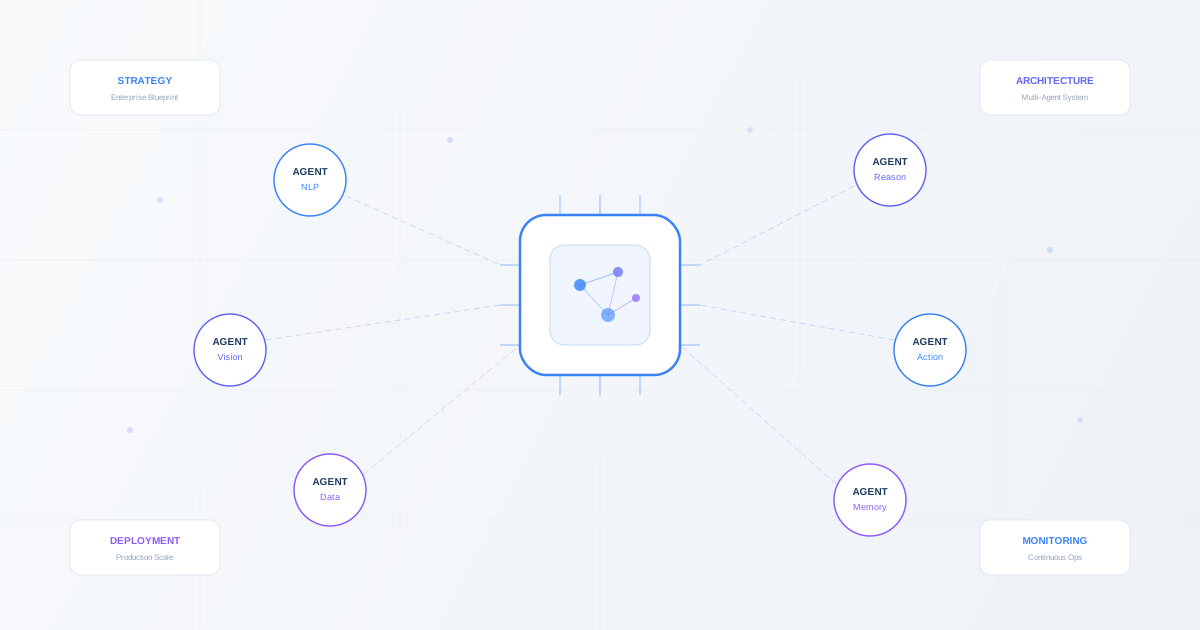
An agentic system wraps a language model in a loop. The model still does the reasoning, but around it sit four things that turn reasoning into completed work: a planner, tools, memory, and guardrails.
The plan, act, observe loop
Given a goal, the agent breaks it into steps, chooses a tool to execute the first step, runs it, reads the result, and decides what to do next. If a step fails or returns something unexpected, it adjusts the plan rather than stopping. This loop is the core of agentic behavior. It is why an agent can handle a task where the exact sequence is not known in advance, such as working a claim denial where the right next action depends on the denial reason code and the payer.
Tools are where the value lives
Tools are the functions the agent is allowed to call: query the EHR through a FHIR API, post a journal entry to the ERP, look up a payer rule, send a document for signature, open a ticket. The model decides which tool to use and with what inputs. Without tools an agent is just a chatbot. With well built tools it can complete real work end to end. The quality of these integrations, not the raw intelligence of the model, is usually what separates a demo from production.
Memory and guardrails
Memory lets the agent keep context across steps and across sessions, so it does not repeat work or lose track of a long task. Guardrails decide what the agent may do on its own, what requires confirmation, and what is forbidden. A mature agentic system enforces spending limits, escalation rules, and mandatory human review on high stakes actions. If you want autonomous agents that plan and execute across your stack safely, that is the discipline behind AI agent development, and it is far more about orchestration and controls than about the model.
Where They Overlap (and Why It Confuses Buyers)
The confusion is understandable, because agentic AI is built on generative models. The reasoning engine inside almost every agent is a large language model. So at the technology layer this is not a versus at all. Agentic systems use generative AI as a component. The real question is not which technology to pick, it is how much autonomy a given workload should have.
A useful way to think about it: generative AI is a capability, and agentic AI is an architecture that puts that capability to work with planning, tools, and controls. A single product can offer both. A support tool that drafts a reply is using generative AI. The same tool, given permission to look up the order, issue the refund, and update the ticket on its own, has become agentic. Nothing about the underlying model changed. What changed is that it was allowed to act, and that is precisely the line where governance has to start.
- Generative AI vs agentic AI is a spectrum, not a switch. Most enterprise systems land somewhere between fully manual and fully autonomous.
- You will often ship generative first. A grounded assistant proves value and builds trust before you grant an agent permission to take actions.
- Agentic without good generative grounding is fragile. If the model reasons from stale or missing context, autonomy just lets it make mistakes faster.
When to Use Each: A Decision Framework
Rather than choosing a technology, decide per workflow. Ask four questions.
- Is the value in the answer or in the action? If a person will act on the output anyway, generative is enough. If the value is in the work being completed without a person driving each step, you want agentic.
- How many systems and steps are involved? One step in one system suits generative. A repeatable process across several systems suits agentic.
- How rules heavy and repeatable is it? Agentic AI pays off most on high volume, rules driven work where the same judgment is applied thousands of times.
- What is the cost of a wrong action? The higher it is, the more human review points you build in. High stakes does not rule out agentic, it just means the agent proposes and a person approves.
A simple rule of thumb. Start with generative AI to make knowledge work faster and to earn trust. Move to agentic AI when you have identified a specific, repeatable, high volume workflow where finishing the task, not suggesting it, is the prize. Do not begin with a general purpose autonomous assistant. Narrow, well scoped agents deliver measurable return far sooner and are far easier to govern.
Real Enterprise Use Cases
The clearest wins we see are narrow agentic workflows in operations and revenue functions, where the work is repetitive, spans systems, and follows rules that an agent can apply consistently.
- Healthcare revenue cycle. A denial arrives, and an agent reads the remittance, classifies the root cause, pulls the clinical record, drafts a payer specific appeal, and queues it for a biller to approve. This is agentic because the steps depend on the denial reason and the payer. See how we approach it on the AI denial management page.
- Finance and accounts payable. An invoice fails a three way match, and an agent investigates the discrepancy, checks the purchase order and receipt, and either resolves it or routes it with a recommendation. That is AI invoice processing handling exceptions, not just reading text.
- Content and knowledge work. Drafting proposals, summarizing research, answering policy questions grounded in your documents. This is generative territory, and it is where most teams get their first quick win.
- IT and engineering. Triaging alerts, correlating incidents, and proposing remediation steps is agentic. Explaining an error message or drafting a runbook is generative.
Across all of these, the pattern holds. Where the work is produce this once, generative fits. Where the work is complete this process every time it occurs, agentic fits. Bonami builds both, and the suite of production agents behind these workflows lives under Bonami X AI.
Risk, Governance, and the Cost of Autonomy
The risks are different in kind, not just degree. A generative model can hallucinate a fact, and a human catches it before it matters. An agentic system can hallucinate a fact and then act on it, which is why autonomy without controls is the real danger. Responsible agentic design assumes the model will sometimes be wrong and builds the system so that being wrong is caught and contained.
In practice that means a few non negotiable controls. Every action the agent takes is logged with the reasoning behind it, so the trail is auditable. High stakes actions require human approval, so the agent proposes and a person confirms. The agent operates with least privilege, so it can only touch the systems and records its task requires. And in regulated settings such as healthcare, protected data is handled under a signed business associate agreement with encryption, access control, and audit logging designed in from the start rather than added later.
The honest tradeoff is this. Generative AI is cheaper and faster to deploy and carries contained risk, but it leaves the process in human hands. Agentic AI can remove the process bottleneck entirely, but it demands real investment in integration and governance. The enterprises that win with agentic AI are the ones that treat oversight as a feature to be engineered, not a checkbox to be added at the end.
Frequently Asked Questions
What is the difference between agentic AI and generative AI?
Generative AI produces content in response to a prompt and then stops. Agentic AI is given a goal, plans the steps, uses tools to act across systems, checks the results, and continues until the goal is met or it reaches a human checkpoint. Generative AI answers a question. Agentic AI completes a task.
Is agentic AI just generative AI with extra steps?
Agentic AI uses a generative model as its reasoning engine, so they are related rather than opposed. The difference is the architecture around the model: planning, tool access, memory, and guardrails that let it take real actions safely. That surrounding system, not the model alone, is what makes it agentic and is where most of the engineering effort goes.
Does my business need agentic AI or generative AI?
Decide per workflow, not for the whole company. If the value is in a faster answer that a person acts on, generative AI is enough. If the value is in a repeatable multistep process being completed without a person driving each step, agentic AI is the better fit. Most enterprises start with generative and add agentic on specific high volume workflows.
What are good first use cases for agentic AI?
Narrow, rules heavy, high volume workflows that span systems give the fastest return. Healthcare claim denial management, accounts payable invoice exceptions, and IT incident triage are strong examples because the same judgment is applied thousands of times and the steps depend on the situation.
Is agentic AI safe for regulated industries like healthcare?
It can be, and it must be designed for it. That means least privilege access, human approval on high stakes actions, full audit logging of every action and the reasoning behind it, and, for protected health information, encryption, role based access, and a signed business associate agreement. Governance is built in from the start, not added later.
Agentic AI, Built for Production
Not Sure Whether You Need Generative or Agentic AI?
Tell us the workflow you want to improve and we will map it to the right approach, from a grounded generative assistant to a fully governed autonomous agent. You get a clear recommendation and a realistic path to production.
Talk to an AI Engineer